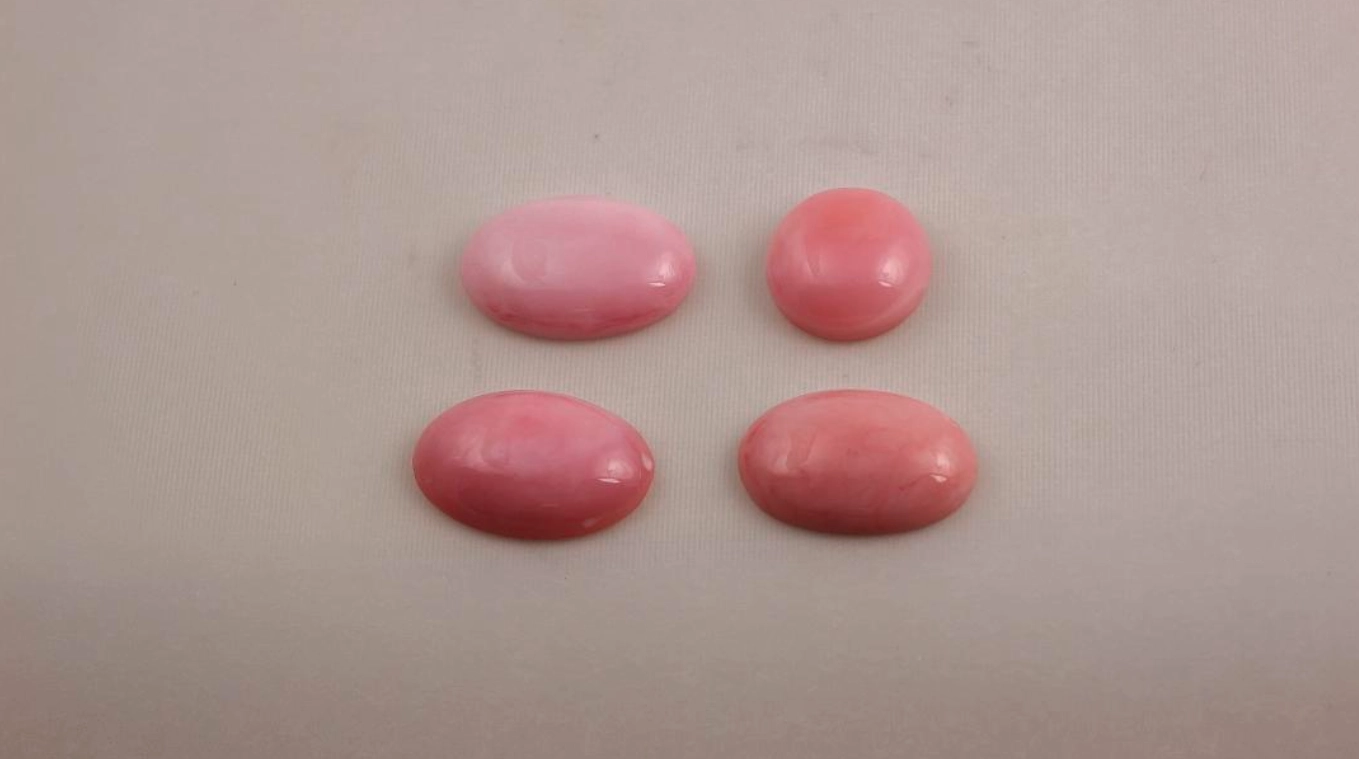
In contemporary crystal practice, pink opal is associated with compassion, emotional comfort, gentleness and self-kindness. Those meanings are symbolic and spiritual interpretations, not effects demonstrated scientifically. Gemologically, pink opal is a variety of common opal: a soft, milky pink stone found in Peru’s Andes that doesn’t show the flashing rainbow colors of precious opal.
What Pink Opal Symbolizes
Most of pink opal’s modern meaning comes from its color and its look. The stone is opaque to translucent and often softly clouded, closer to a blush than to a vivid rose. People who work with crystals tend to read that softness as emotional tenderness. The associations that come up again and again are compassion for others, comfort during difficult stretches, and kindness toward oneself.
For someone choosing a stone, the practical appeal is that this kind of meaning is quiet and personal. Pink opal isn’t tied to a goal like success or attraction. It’s more often chosen as a reminder to slow down, treat yourself gently, or hold onto a relationship. Some people choose it as a gift for exactly that reason: to say “be kind to yourself” without saying it. Emotional renewal is another theme: a fresh start after a hard period, a softer way of moving forward. These are readings people bring to the stone, and the stone isn’t claimed to do anything on its own.
Pink Opal and the Heart Chakra
In contemporary spiritual traditions, pink opal is most often paired with the heart chakra. The chakra system comes from Indian spiritual traditions, which describe energy centers along the body, and the heart chakra is associated with love, compassion and emotional openness. Pairing a pink stone with it is a modern crystal-practice convention, and the pairing appears across several crystal and jewelry sources, though not every writer assigns the same stone to the same center. It’s an interpretive framework, not a biological structure, and no gemstone has been shown to affect it.
What Pink Opal Is
Pink opal is a pink variety of common opal. That distinction matters because most of what people picture when they hear “opal” is precious opal, which shows play-of-color: shifting flashes of spectral color inside the stone. According to the Smithsonian’s National Museum of Natural History, common opal is opaque to translucent and lacks play-of-color, and pink opal is a variety of common opal from Peru’s Andes, usually a milky pink that ranges from very pale to a medium rose. So a pink opal that’s smooth and even in color, with no rainbow flash, is behaving as expected. It isn’t a flawed precious opal.
Gemological references describe the material as a mixture. GemDat, a gemstone database that cites a 2012 reference on Peruvian gemstones, lists pink opal as a combination of opal, a fibrous clay mineral called palygorskite, and minor chalcedony, with a hardness of about 6. Mindat notes that “pink opal” isn’t an approved mineral species. It’s a trade name for a type of material, which is common in the gem world.
Why It’s Pink
The pink color of Peruvian opal has been linked to small amounts of natural compounds within the stone. The Smithsonian attributes the color in specimens from Peru’s Ica region to organic compounds called quinones.
Studies of material from Peru’s Acarí mine have also identified color-related organic compounds, while examining possible contributions from elements such as manganese and iron. The findings are specific to the samples studied, so they don’t establish one universal explanation for every pink opal.
A clay mineral called palygorskite is also present in the studied material, but its presence alone doesn’t prove that it produces the pink color.
Treatments and Seller Disclosures
Opal in general can be treated. GIA says opals can be impregnated with oil, wax or plastic, and can also be treated with sugar and smoke methods. Reliable information about how commonly these treatments occur in pink opal specifically is limited, so it’s reasonable to ask a seller whether a piece has been treated or dyed. For a significant purchase, GIA’s buyer’s guide notes that its identification reports state whether a stone is natural or laboratory-grown and name any detectable treatments. Be cautious of descriptions that call a stone rare, untreated or authenticated without saying how that was determined.
Where the Meaning Comes From
Opal in general has a documented history, and it’s worth keeping separate from pink opal’s modern symbolism. GIA’s history of opal notes that the Romans called the stone opalus, a word that came to mean “precious stone,” and that the Roman writer Pliny praised opals for the play of color inside them. The ancient Greeks reportedly believed opals gave their owners the gift of prophecy and protection from disease.
Sir Walter Scott’s 1829 novel Anne of Geierstein helped shape opal’s reputation for bad luck, although superstitions about the gemstone have a longer history. These historical accounts concern opal generally, rather than pink opal specifically. The stones Pliny described showed play-of-color, which the pink common opal discussed here lacks.
The compassion, comfort and heart-centered meanings attached to pink opal belong to modern crystal practice. Some sellers say pink opal was sacred to the Inca or revered in other ancient cultures, but archaeological or scholarly documentation supporting those specific claims has not been established in the sources reviewed. That doesn’t prove such use never occurred. It means the claims shouldn’t be presented as documented history.
For now, the clearest way to understand pink opal’s meaning is as a contemporary interpretation within the broader tradition of attaching personal and cultural significance to gemstones.
How People Use Pink Opal
Most uses are simple and personal. Many people wear pink opal as a piece of jewelry that carries a private meaning: a pendant chosen after a difficult year, a ring given by someone who cares about them, earrings picked because the color feels calming. It’s also a common gift for milestones or for someone going through a change.
Others keep a small stone nearby as a focus for reflection. A person might hold it for a few quiet minutes while thinking about how they’d like to treat themselves more kindly, or keep it on a desk or nightstand as a visual reminder. Some use it in meditation as an object of attention. These are optional practices, and they don’t depend on any special property of the stone. You don’t need to buy anything extra, and nothing here has been shown to heal or protect.
Wearing and Caring for Pink Opal Jewelry
Pink opal is a relatively soft stone, so it benefits from some care. GIA rates opal at 5 to 6.5 on the Mohs hardness scale and describes its toughness as very poor to fair. Pink opal is usually listed at about 6, though that figure comes from a database compilation. That’s softer than many common gems, including diamonds, sapphires and quartz, which can scratch it. GIA advises storing opal jewelry by itself, away from harder gems.
Rings are the most vulnerable. GIA’s buyer’s guide says opal is vulnerable to scratches and chips, and suggests a protective setting, with metal or other gems surrounding the stone, if you’re tough on your jewelry. For frequent wear, earrings and pendants are generally more forgiving choices because they are less exposed to everyday knocks and friction. If you prefer a pink opal ring, choose a setting that protects the edges of the stone and remove it before activities that could scratch or chip it.
For ordinary opal jewelry, GIA recommends warm, soapy water for cleaning. Other methods can damage the stone or any treatments it contains. Jewelry construction matters too: prolonged exposure to water can weaken the adhesives in opal doublets and triplets, which are assembled stones made from bonded layers. Avoid soaking these pieces, and seek specific care guidance if the stone or its treatments are uncertain.
Opal can also fracture when exposed to high heat or sudden temperature changes. GIA notes that heat from intense light can cause crazing, or small internal cracks. Avoid leaving opal jewelry in strong sunlight, near a heater or in a hot car.
There is no established need to keep pink opal permanently submerged in water to prevent it from drying out. Gentle cleaning and sensible storage are more useful than elaborate maintenance rituals.
Does Pink Opal Have Healing Properties?
Many crystal sellers list emotional and physical benefits for pink opal, from easing stress to supporting the heart. These are beliefs, not demonstrated effects. There is no established scientific evidence that pink opal treats medical or psychological conditions, and chakra associations aren’t a scientific mechanism.
A stone can serve as a personal reminder or focal point during reflection, which some people may find meaningful. If you’re dealing with anxiety, low mood, sleep problems or another health concern, pink opal may have personal symbolic value, but it shouldn’t replace professional care.
Pink opal’s meaning is rooted in modern associations with compassion, gentleness and self-kindness. Whether you wear it as jewelry or keep it as a personal reminder, its significance can come from what it represents to you. Choose a piece that suits how often you plan to wear it, and treat its spiritual associations as personal symbolism rather than proven effects.