Smart casual and business casual both fall somewhere between everyday clothes and formal business attire. The difference isn’t always clear. Smart casual generally pairs relaxed clothes with a few refined details. Business casual leans on workplace staples like trousers, blouses and knitwear. What counts as either depends heavily on the employer, the venue and the invitation, so the useful skill is reading the setting, not memorizing a list.
Smart Casual vs Business Casual: What’s the Difference?
Business casual is usually a step more formal. Australia’s job site SEEK describes it that way, while noting that neither term has one universal definition. Indeed points out that companies, industries and career levels define business casual differently, with a tech company leaning more relaxed and a financial firm more conservative. It also describes smart casual as business casual’s staples plus trendier pieces, such as leather sneakers, bold prints and statement accessories.
Casual chic, which is more a way of styling relaxed clothes than an expectation set by a workplace, overlaps with both.
The table shows typical tendencies, not rules.
| Feature | Smart casual | Business casual |
| Typical setting | Dinners, social events, relaxed or creative workplaces | Offices, client meetings, many interviews |
| Overall feel | Relaxed pieces with refined touches | Businesslike, with softer edges than a suit |
| Jeans | Dark, intact pairs often fit | Depends on the office; some allow dark denim, some don’t |
| Shoes | Clean, minimal sneakers may work | Loafers, flats and boots are the safer bet |
| Color and pattern | More room for bright color, prints and bold accessories | Quieter palette, with small pops of color |
| Blazer or layer | Optional | Optional, but common |
Can You Wear Jeans?
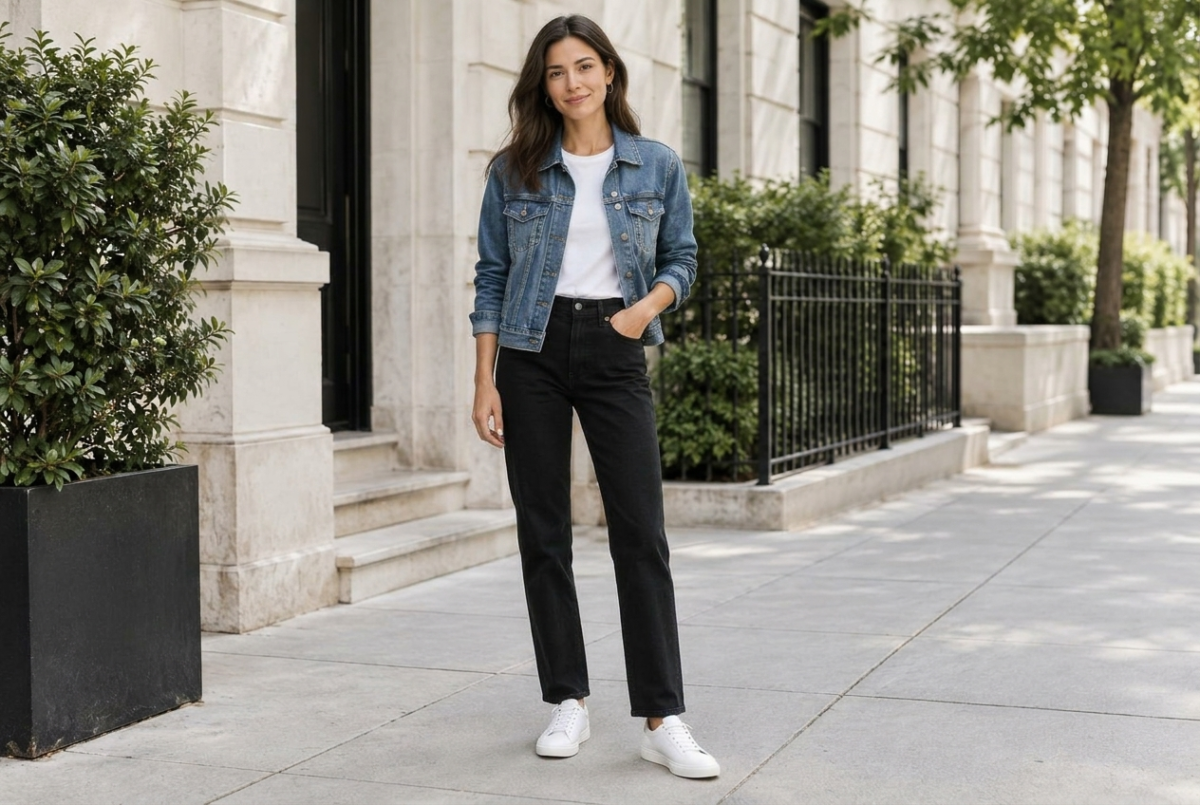
In smart casual, dark, intact jeans are one of the most common ways to bring in the relaxed half. SEEK says they may suit some smart-casual workplaces and advises checking local expectations first.
For business casual, Indeed includes dark, non-distressed jeans among possible options but emphasizes checking the employer’s actual dress code. In a more conservative workplace, tailored trousers may be the better choice.
For either dress code, dark jeans without rips or heavy fading are generally easier to dress up. A clean fit matters more than a particular cut.
An interview raises the stakes. When you don’t know the company culture, tailored trousers are generally the safer pick than denim.
Are Sneakers Acceptable?
Sometimes, and the sources disagree. SEEK says clean, sleek sneakers may be acceptable in smart casual and that more formal shoes, such as loafers or oxfords, are often expected in business casual. Indeed, by contrast, includes leather or canvas lifestyle sneakers among possible business-casual footwear.
A practical way to read that: the more traditional the office and the higher the stakes of the meeting, the less likely sneakers fit. If you wear them, choose a clean, minimal pair rather than athletic trainers.
When you’re unsure, loafers, ballet flats or ankle boots can give an outfit a polished finish without feeling overly formal.
Do You Need a Blazer?
No. A blazer is useful, but it isn’t compulsory for either dress code.
A structured cardigan, a fine-knit sweater over a collared shirt, or a dress that already looks polished can work just as well, depending on the workplace and occasion.
A blazer earns its place when the stakes rise, such as an interview, a client meeting or a networking event. In practice, it’s often the quickest way to make an outfit look more businesslike without changing everything else.
What to Wear for Smart Casual and Business Casual
These combinations use pieces many closets already hold. When building a capsule wardrobe, the same idea applies: start with clothes you own and find combinations that work for different occasions.
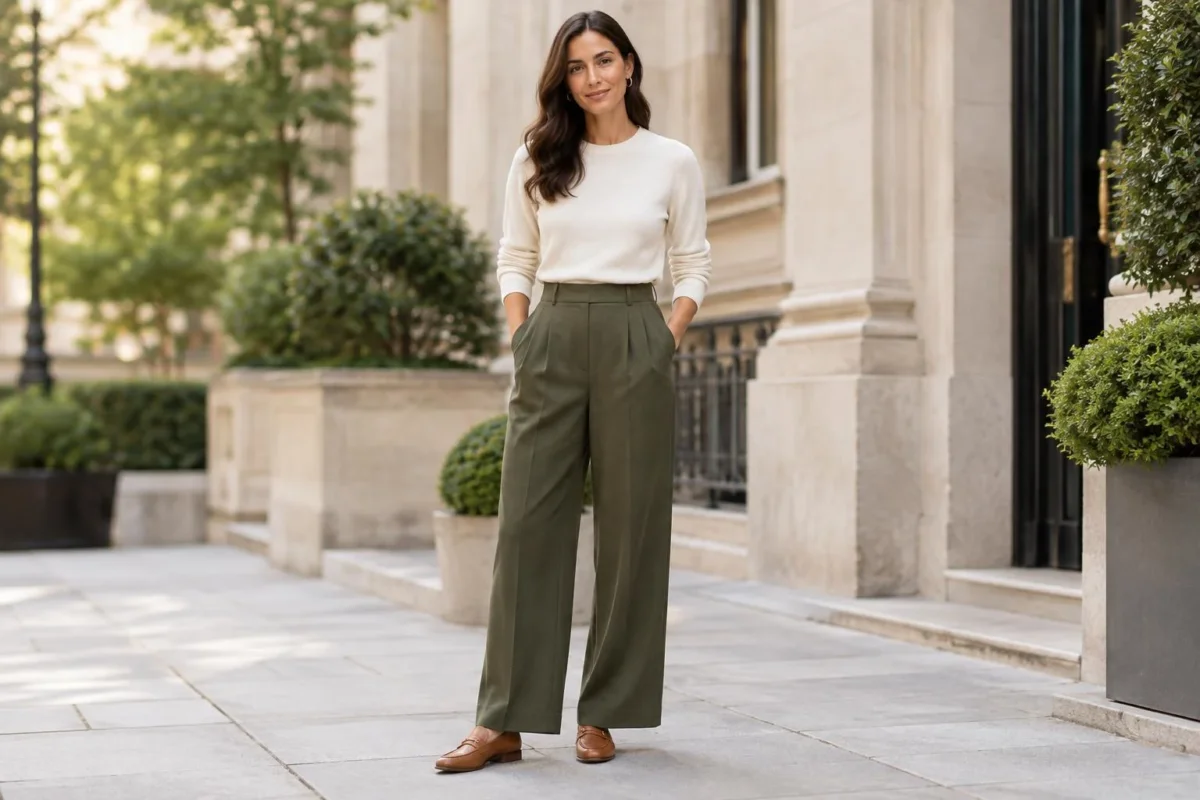
For a business-casual office, start with straight-leg trousers in black, gray or navy. Add a button-front or softly draped blouse, with a fine-knit cardigan if you need another layer. Loafers or pointed flats finish the look. The neutral base leaves room for a little color without making the outfit feel busy.
For an interview at a business-casual workplace, tailored trousers or a workplace-appropriate skirt with a blouse or smooth knit are a reliable starting point. Add a blazer when the role or company calls for more formality. Traditional corporate interviews may call for business-professional attire instead, so check the employer’s guidance or ask the recruiter if you’re unsure.
At a smart-casual dinner, dark jeans with a drapey top and ankle boots can work, especially when the top has a refined finish, such as a satin-look fabric or a fine knit. A knit midi dress with the same boots is another option. One considered accessory, like a simple necklace or structured bag, can bring the outfit together.
For a networking event, take your usual work outfit and make it slightly more polished: tailored trousers with a crisp shirt or knit, plus a blazer or clean jacket. Choose shoes you can comfortably stand in for a couple of hours.
What if the Dress Code Isn’t Clear?
Start with the actual invitation or workplace policy. If the wording is vague, consider the venue, the occasion and what people typically wear there.
For a new job, observing coworkers can help. For an interview or unfamiliar event, asking the recruiter, organizer or HR contact is often the simplest solution. Even a short question such as “Is the dress code closer to office wear or dressy casual?” can clear things up.
If you’re still unsure, go slightly more polished while keeping the outfit comfortable. More formal isn’t automatically better at a social event, though. A full office look at a relaxed dinner can feel out of place.
Treat the label as a clue, not a rulebook. The setting, the people and the occasion tell you more than the words “smart” or “business” ever will. Sometimes one thoughtful adjustment, like swapping sneakers for loafers or adding a blazer, is enough.