A denim jacket goes with jeans, dresses, skirts and trousers, so the useful question is less what it matches than how it fits. Check three things first: where the hem lands, how much room the shoulders and sleeves give you, and whether the wash is light, medium, dark or black. Those answers decide most outfits, and none of them requires buying anything.
Start With Your Denim Jacket’s Fit
Jackets vary a lot in length and cut, and the cut changes what sits well underneath.
| Cut | Pairs naturally with | Worth checking |
| Classic (hem near the waist or hip) | Jeans, trousers, dresses, skirts | Where the hem falls against a waistband or dress seam |
| Cropped (at or above the waist) | Higher-rise jeans and trousers, dresses, midi skirts | Whether a gap shows when you reach or bend |
| Oversized | Knit dresses, sweaters, straight or slim bottoms | Shoulder seams and sleeve length, plus extra fabric at the cuffs |
| Longline (past the hip) | Slim or straight bottoms, dresses | Where it ends over a skirt or dress, and whether it restricts movement |
A cropped jacket can sit neatly above a high-rise waistband, avoiding extra fabric around the waist. That’s a practical observation, not a requirement. Some stylists set firm rules: The Wardrobe Consultant, for example, says a cropped jacket should hit between the lowest rib and the hip. That’s one stylist’s preference. If your jacket sits a little higher or lower and feels comfortable, it can still work.
What to Wear With a Denim Jacket
These outfits use pieces many closets already hold. Take the ones that fit your day and ignore the rest.
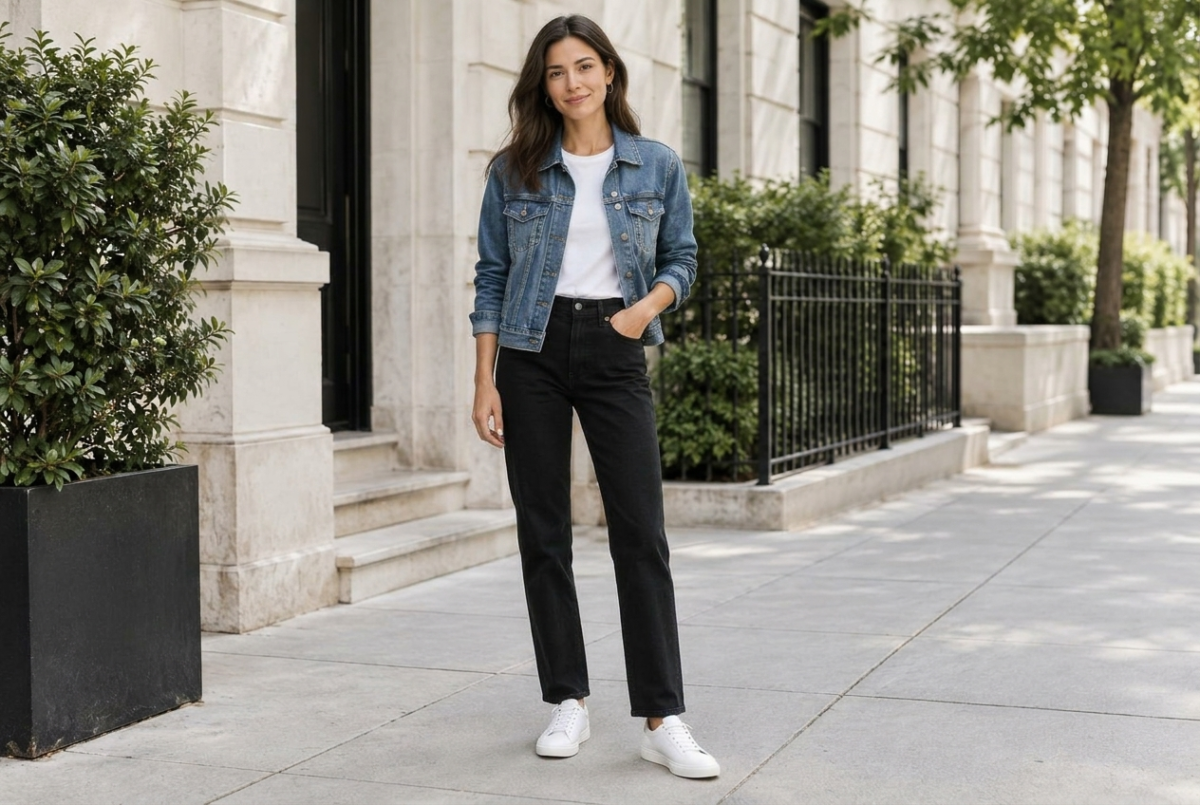
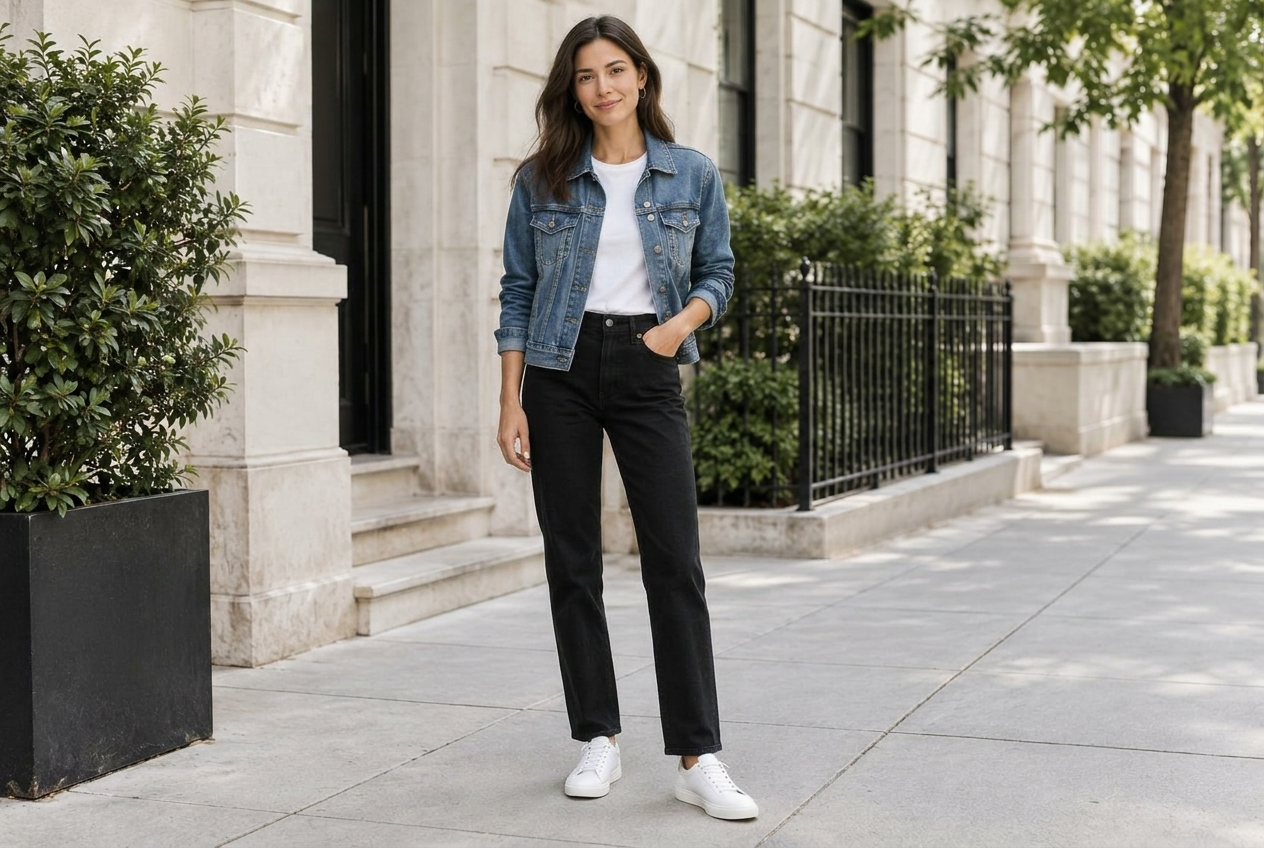
For errands, a classic medium-wash jacket over a white tee, with black straight-leg jeans and white sneakers, is hard to get wrong. The dark bottoms and light top frame the blue, and the jacket works open or buttoned depending on the weather.
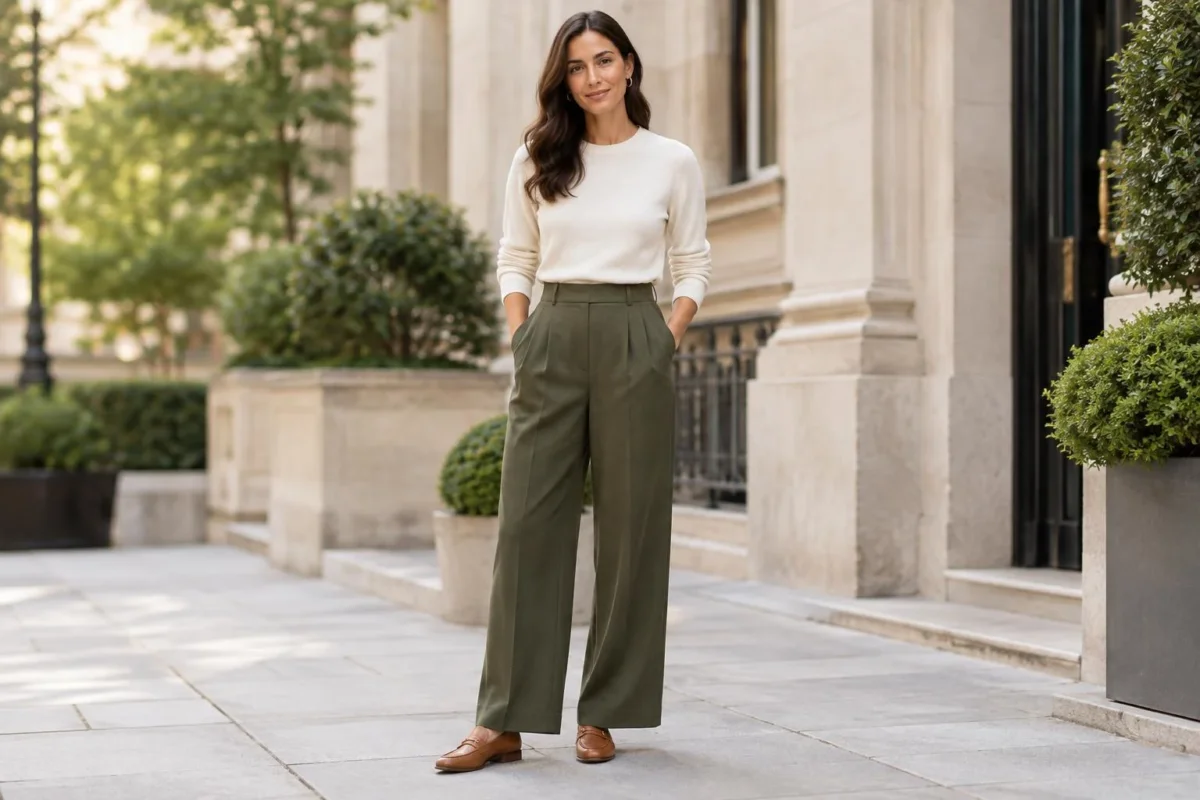
A cropped jacket suits high-rise wide-leg jeans or trousers, worn with a fitted knit or a tucked-in tee. The hem meets the waistband, so the outfit looks finished without a belt. Simple sneakers or loafers keep it relaxed. If the jacket sits higher than expected, try a longer top underneath for more coverage.
An oversized jacket looks good over a fine-knit dress and ankle boots. Choose a thinner knit so the shoulders don’t strain, and push the sleeves up or cuff them if they cover your hands. If the jacket overwhelms the dress, leave it open to show more of the shape underneath.
Over a skirt, try the jacket with a tucked-in tee or blouse and flat shoes. A soft midi skirt gets some structure from the denim. Check where the jacket ends against the skirt: a cropped jacket can show the waistband, while a longer one creates a more relaxed silhouette.
For a relaxed office, a dark or black jacket over a blouse with straight tailored trousers and loafers can work, but only where denim is accepted. How formal the workplace is matters more than the outfit. Whether denim outerwear passes in a business-casual workplace depends on the employer, and checking with HR or noticing what colleagues wear settles it.
For a casual dinner, a black jacket over a knit top with a midi skirt and ankle boots is a good fit. Many people find black denim reads a little sharper than blue, though that’s a matter of taste.
Can You Wear a Denim Jacket With Jeans?
Yes. Double denim works in several ways, and stylists have different preferences about matching and contrasting washes. The Wardrobe Consultant says the washes should either match closely or differ clearly. Percival, a menswear brand, says there’s no simple rule about shades. Denim Hunters, writing for denim enthusiasts, prefers contrast. Two of those sources are menswear, so treat them as opinions about denim, not rules for women’s outfits.
Here are a few options, depending on what you own:
- Contrast: A light-wash jacket over dark straight jeans, with a white tee and sneakers or ankle boots. The two washes read as separate pieces.
- Matching: If your jacket and jeans are the same wash, a white or striped top and different-colored shoes keep the outfit from feeling heavy.
- Texture: A faded jacket with smoother, darker jeans gives the pieces some distinction without relying on color.
A non-denim top, a belt or shoes in a different color usually separates the two pieces more clearly than the exact shade of blue does.
How to Dress Up a Denim Jacket
A denim jacket is casual, but the pieces around it can steer the outfit. Tailored trousers, a simple midi skirt or a plain dress, tidy shoes and plain jewelry all help.
A denim jacket can also be a practical layer over a simple dress in an air-conditioned restaurant. HerStyleReport’s brunch outfit guide suggests wearing one over a floral dress when the restaurant is chilly. It works the same way on cooler evenings.
Neater styling doesn’t mean it meets a dress code, though. A denim jacket can suit a relaxed office and still be wrong for a formal one, or for an occasion with a stated dress code. Check the invitation or the policy first.
Layering a Denim Jacket Through the Seasons
In spring, a denim jacket goes over a tee, a thin knit or a dress. For 65-degree weather, whether you need that extra layer depends on the wind, shade and how long you’ll be outside. On cool summer evenings, it covers a sleeveless dress or tank.
In fall, it layers over sweaters, but check the room: a bulky knit under a fitted jacket can strain the shoulders and sleeves. An oversized jacket gives more space, as long as the shoulders and sleeves still fit properly. Fine-knit sweaters usually work best.
Wearing a jacket under a coat can feel restrictive. If the coat’s sleeves get tight, choose a thinner layer, or wear the jacket as your outer layer on a mild day. In mild winter climates, the jacket works as a middle layer. On a truly cold day, it’s one layer, not the whole system.
Try the jacket over the three tops you wear most. Whichever combinations feel comfortable in the shoulders and sleeves are the ones to reach for first.
How to Know If an Outfit Works With Your Jacket
Before settling on an outfit, try three quick checks.
First, raise your arms and reach forward. The jacket should give you enough room to move without pulling uncomfortably across your shoulders.
Next, look at where the hem lands when you’re standing and sitting. If it bunches awkwardly at your waist or over a skirt, try a different top or leave the jacket open.
Finally, think about where you’re going. An outfit can look put together and still be too casual for the occasion.
If the jacket feels comfortable, works with the clothes underneath and suits your plans, there’s no reason to follow a stricter styling rule.