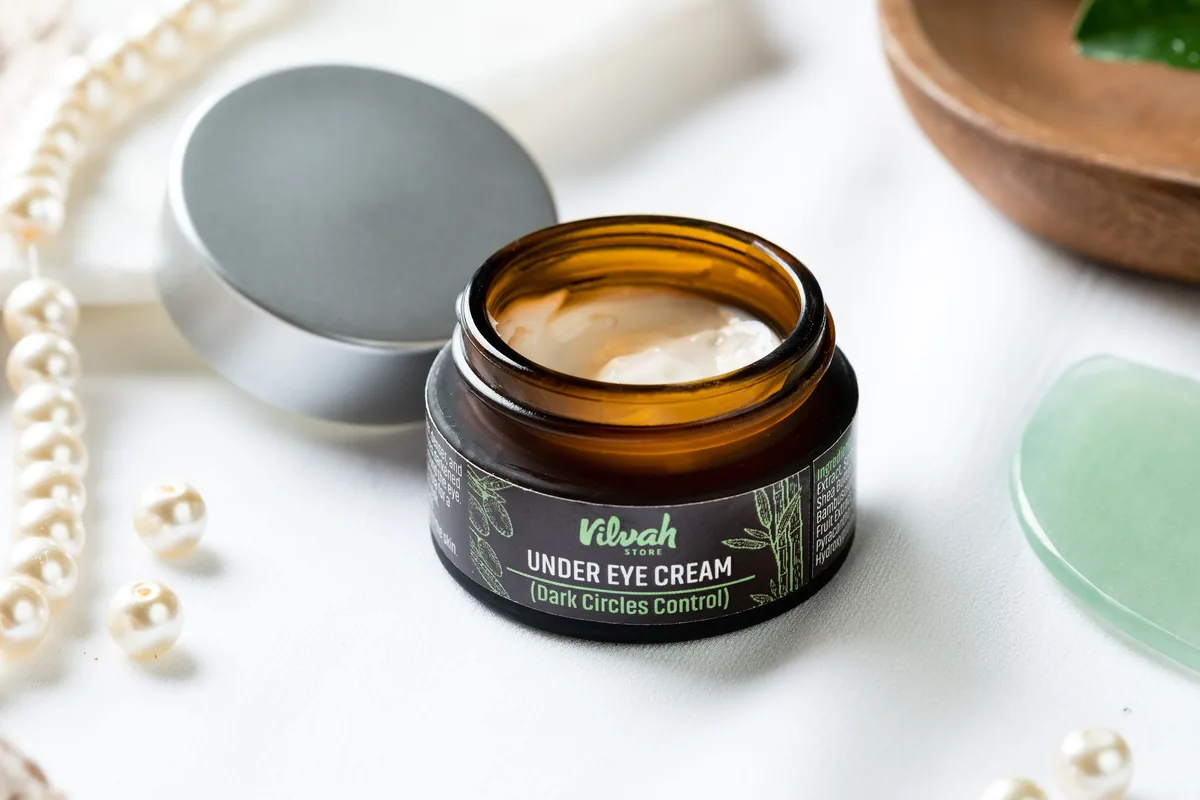
Yes, eye cream expires. Check the jar or carton. A 6M open-jar symbol means six months from first use. Zinzino gives that instruction for its VISUALIZE Eye Cream. For an unopened jar, look for a printed date or ask the manufacturer to check the batch.
How Long Does Eye Cream Last?
If your cream says 6M and you first open it in March, its six-month period ends in September. If the same pack has a printed expiry date in July, use July as the limit.
Why Eye-Area Products Get a Shorter Life
The U.S. Food and Drug Administration (FDA) puts it plainly: eye-area cosmetics tend to have shorter shelf lives than other products, and eye infections caused by them can be serious.
Handling is the part most people underestimate. The FDA lists dipping fingers into a product as one of the main ways microorganisms get in, and notes that preservatives can break down over time and allow those organisms to grow. A pump or a tube limits that contact; a wide jar does not. Moisture, heat, sunlight, and air can also change a cream’s color and texture, and emulsions — mixtures of water and oil — can separate.
The Printed Date, the PAO Symbol, and No Date at All
Look on the jar and carton for a printed date or an open-jar symbol. Here’s how to read each one and what to do if you find neither.
A printed expiration or “best before” date. Some products carry one, usually on the jar, the base, or the outer carton — check the carton before you throw it away. If a date is printed, it is the manufacturer’s statement for that product. If both a printed expiry date and an open-jar period apply, use whichever limit comes first.
The PAO symbol. This is the small open-jar icon with a number and the letter M inside or beside it — 6M, 9M, or 12M. PAO stands for Period After Opening: the number of months the product is meant to stay safe and effective after you first open it. Count from the opening day, not the purchase day. In the United States, the symbol is not required by law.
No date at all. This is common, and it does not mean the product lasts forever. In the US, there are no laws or regulations requiring cosmetics to have specific shelf lives or expiration dates on their labels — the FDA states this directly in its shelf-life guidance, while making manufacturers responsible for ensuring their products are safe. A jar with no date and no PAO symbol is not unregulated; its maker has simply not printed a date for you to follow. If neither is visible, check the carton or contact the brand with the batch code. If you cannot establish when an old jar was opened, replace it. Mark the opening date on the base with a sticker, or save it in your phone, when you start the jar.
In the U.S., follow the printed expiry date on an eye cream labeled as sunscreen. Some sunscreens can omit that date if testing shows at least three years of stability. For an undated sunscreen, FDA advises treating it as expired three years after purchase. Also follow any shorter period marked on the pack.
Signs Your Eye Cream Has Turned
A date tells you when to stop trusting the calendar. Your senses tell you when to stop sooner. The FDA’s guidance lists the changes to watch for: color and texture changes, a new smell, separation, and drying out or hardening. Any one of them is a reason to throw the product away, even if it is still inside its PAO period.
- Smell. A sour, rancid, or chemical smell that was not there when you opened it.
- Texture. Graininess, clumping, a watery layer on top, or a cream that has gone unusually thick or thin. Stirring a separated cream back together may make it look normal again, but that does not prove it is safe.
- Color. Darkening or yellowing since the first week. Color change on its own does not prove contamination, but it does show the ingredients have altered.
- How it feels. New stinging, itching, redness, or puffiness from a product that used to feel comfortable. Stop using it and see whether the reaction settles.
A cream can also look, smell, and feel exactly as it did on day one and still be past the point where its preservatives can be relied on — the FDA notes that preservative breakdown can allow bacteria and fungi to grow without any visible change. The date sets the limit, and the senses can shorten it; neither alone guarantees safety.
What Happens If You Use Expired Eye Cream?
Stop using the cream if it irritates your eyes. If irritation persists, contact a healthcare professional. Seek urgent care if eye pain is severe or comes with light sensitivity or a change in vision. Sudden loss of vision needs emergency care. If you develop an eye infection, discard eye-area cosmetics used during it and wait until it has healed before using eye cosmetics again.
How to Store Eye Cream So It Lasts as Intended
Storage cannot extend a PAO period, but poor storage can shorten it. The FDA advises against leaving cosmetics exposed to heat, such as in a hot car, because heat can make preservatives break down and bacteria and fungi grow faster. A steamy bathroom shelf is a worse home for a jar than a cool, dry drawer away from direct sunlight — Ulta’s storage guide recommends a cool, dark spot such as a bedroom drawer.
Wash your hands before applying it, keep the lid closed when the jar is not in use, and do not share it — the FDA warns against sharing makeup, because you may be sharing an infection. Do not add water to thin a dried-out cream; as the FDA warns for mascara, adding water or saliva introduces bacteria.
When You Cannot Remember When You Opened It
The jar has no date written on it, the carton is long gone, and the PAO symbol — if there is one — does not say when the clock started. Work through what you do know: the purchase date from an order confirmation or a receipt, where the jar has been stored, and whether its smell, texture, or color has changed since you first used it. If you cannot establish its age with any confidence, replacing it is the more cautious choice.
Choose a size you expect to finish within the period marked on it.
Can I Use Eye Cream Past Its PAO If It Looks Fine?
Looking fine is not a guarantee. A cream can keep its color, smell, and texture while its preservatives weaken and its active ingredients lose strength. The PAO figure is the manufacturer’s tested window; once it has passed, the manufacturer is no longer standing behind the cream’s safety or effectiveness. For a product used this close to the eyes, that is a good place to stop.