Most everyday neutrals work with brown pants: white, cream, gray, navy, black, olive and soft blue are all common choices. What changes the result is how dark your brown is and how much contrast you want between the pants and everything around them. This guide covers those decisions, including a few where styling advice genuinely differs, so you can build outfits from clothes you already own.
Start With Your Shade
Brown covers a wide range, and the same top can look quite different depending on the shade. These three groups are a styling shorthand, not a standard, and your pants may sit between two of them.
| Your pants | Easy starting points | Worth trying |
| Dark brown (chocolate, espresso) | White, cream, gray, navy, light blue | Black (see below), burgundy, camel or cream for a tonal look |
| Mid brown (rust, cinnamon, caramel) | Cream, white, olive, denim blue | Black, a deeper brown |
| Light brown (tan, camel, beige) | White, navy, olive, black | Dusty pink; a darker or a matching top, depending on the look you want |
White and cream are the safest choices across all three rows. Klodsy’s top-color chart calls white or cream the safest pick for any shade, and TeriLyn Adams says black and white work with nearly any brown.
Choosing a Top: Contrast or Tonal
The main decision with a top is whether you want it to stand apart from the pants or blend with them.
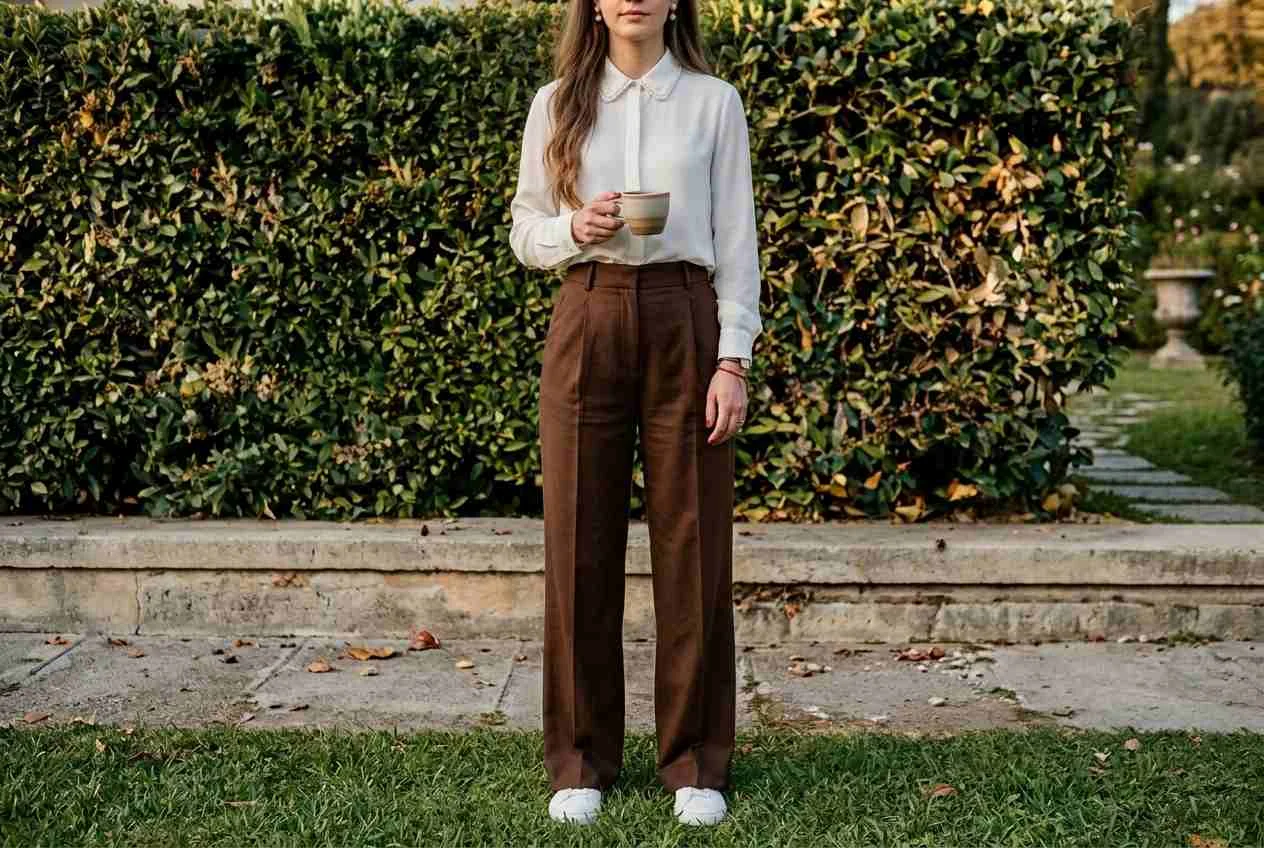
For contrast, go lighter or clearly different. White, cream, light blue and gray can create separation from brown. On light brown, a white top creates a fresh, clean combination, though the contrast will be subtler with very pale tan or beige pants. Olive and navy work as deeper, earthy contrasts.
For a softer look, stay closer in tone. Some guides advise a darker top with light brown pants, because a pale beige top can wash out against tan. Others go the other way: InStyle suggests that on a deep tan pant, a matching top can look more cohesive. Both approaches work. If you choose a tonal top with light brown, vary the tones a little, such as camel with cream, so the pieces don’t blur into one block.
For color, pink, olive, rust and burgundy are common additions. Dusty or light pink gives light brown a softer, brighter look, as in one of the casual outfits below.
Black With Brown
Black and brown can work together, and the old avoid-it rule has largely faded. Neiman Marcus says it has come and gone, and TeriLyn Adams calls black her favorite pairing with brown. The guides differ on the conditions, which is where the practical decision lies. InStyle says it looks best when neither color is too dark. Klodsy suggests black is strongest beside a clear chocolate or espresso, not a gray-leaning brown.
A practical way to decide:
- A clearly warm brown: Rust or cinnamon can stand apart from black. Chocolate and black can also work, but darker chocolate creates a subtler, lower-contrast pairing. The rust corduroy outfit below is one example.
- A very dark brown: Black can create a close, low-contrast pairing. If you want more separation between the colors, try white sneakers, a cream bag or a pale belt. You don’t need to add a lighter piece if you prefer the darker combination.
- A grayish or faded brown: Black may create a more muted combination. Cream, navy or white are alternatives if you prefer greater contrast.
- Not sure? Try it in daylight. You can also start with black shoes or a black bag rather than a black top.
Mixing Browns
An all-brown outfit can go two ways, and guides disagree on which looks better. Klodsy suggests using clearly different shades (light, mid and dark) and warns that shoes or a belt in nearly the same brown as the pants can look accidental. InStyle describes near-matching pieces (not identical, but close) as a way to make a tonal outfit cohesive. TeriLyn Adams notes that matching browns is tricky and tends to break them up with black or white.
So pick the approach that fits your taste:
- Clearly different tones: Camel or cream against dark brown.
- Deliberately close tones: Several browns in the same family, as long as it looks intentional.
- Break it up: A white or cream layer, or black shoes or a bag, between the browns.
Shoes and Hem Length
Which shoes work depends on how long your pants are and what you want the shoes to do.
- Cropped or ankle-length pants: The shoe is a visible part of the outfit, so choose it deliberately. Loafers, flats, white sneakers and ankle boots all work.
- Straight, full-length pants: The hem usually just meets the top of the shoe, so sneakers, loafers and ankle boots are all workable. Check that boots have enough room under the hem.
- Wide-leg, full-length pants: The hem covers much of the shoe, so shoe height and whether the hem drags matter more than the shoe’s color. See our guide to what shoes to wear with wide-leg pants for how different hems work with different footwear.
Shoe color is a preference. White sneakers are an easy casual option; Klodsy says they go with every shade, while TeriLyn Adams likes them best with lighter browns and brown denim. For loafers, the advice differs: Klodsy suggests a clearly different brown, such as cognac or tan under chocolate trousers, while TeriLyn Adams wears black or dark brown loafers with chocolate pants and cognac with tan. If you’d rather not worry about matching browns, black or white shoes are the simplest route. If you like brown shoes, either make them noticeably lighter or darker, or keep them close on purpose.
Four Outfits You Can Recreate
The photographs below illustrate four clothing combinations. The alternatives suggested after each image are styling ideas, not items necessarily shown in the photograph.
Tan and Pink: A Relaxed Weekend Look
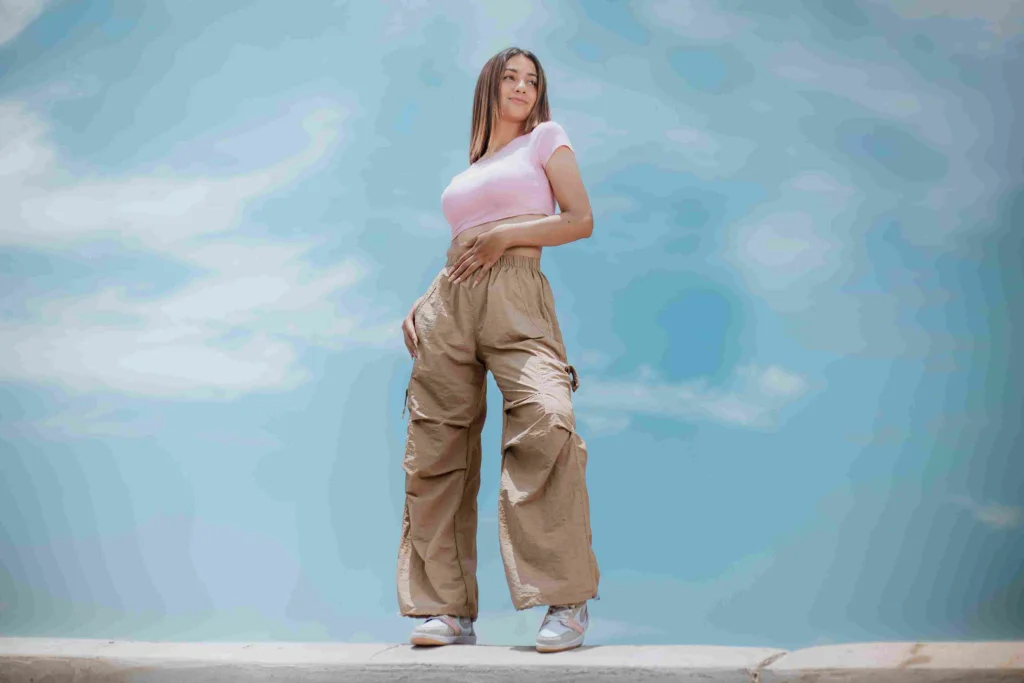
This is a simple recipe: loose tan pants, a soft pink tee, light sneakers. The pink adds color without competing with the pants. If you prefer more coverage, a longer tee works the same way, and a light denim or chambray layer would suit cooler days.
Tan and White: A Clean Contrast
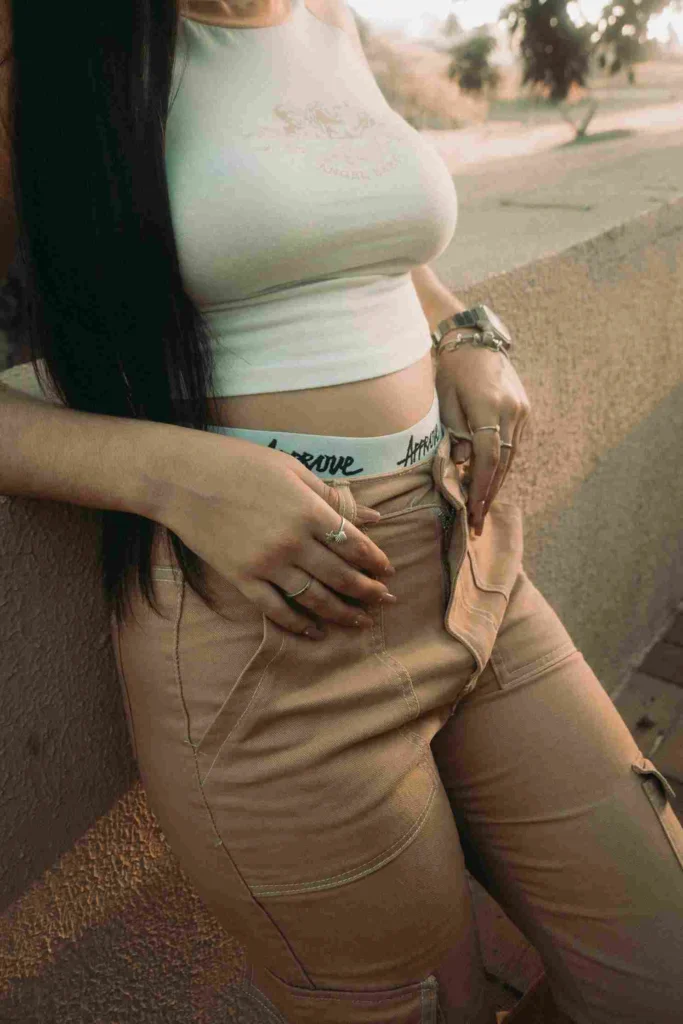
White against tan is the contrast approach in its simplest form. The photograph is a close-up and doesn’t show shoes, so choose your own: white sneakers keep it casual, and tan or brown sandals would suit warm weather. A longer white tee or a button-down in the same color works if you want a less cropped look.
Dark Brown and Cream: Polished Casual
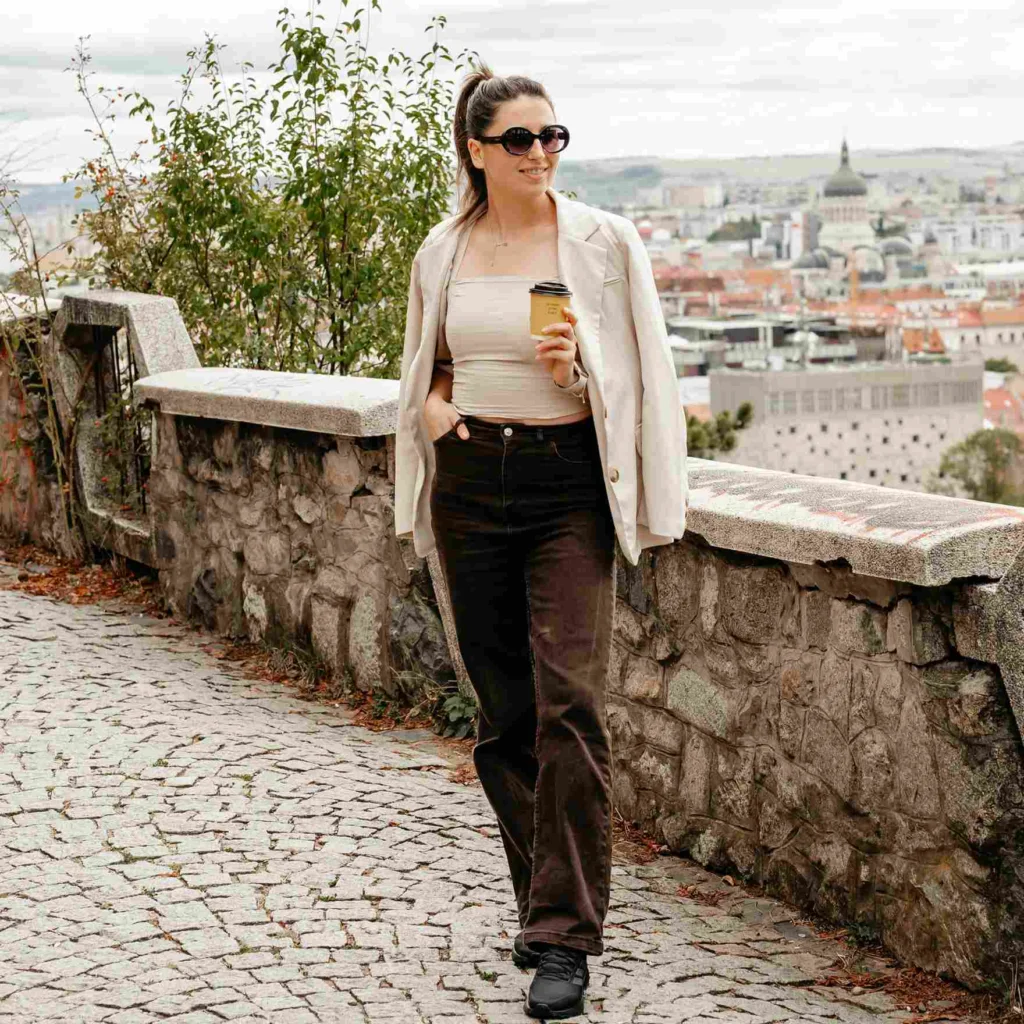
A light cream blazer against deep brown trousers gives a clear contrast with a smart, relaxed shape, and black sneakers keep it casual. This is a polished casual outfit, not necessarily a formal office look. For a more traditional workplace, loafers or flats in place of the sneakers would make it dressier. TeriLyn Adams suggests dark brown in a structured fabric is the most work-friendly shade, and saves lighter tans and corduroy for more casual days. Whether brown trousers suit your office depends on your dress code. Our guide to smart casual vs. business casual explains how those expectations differ.
Rust Corduroy and Black: A Contrast Outfit
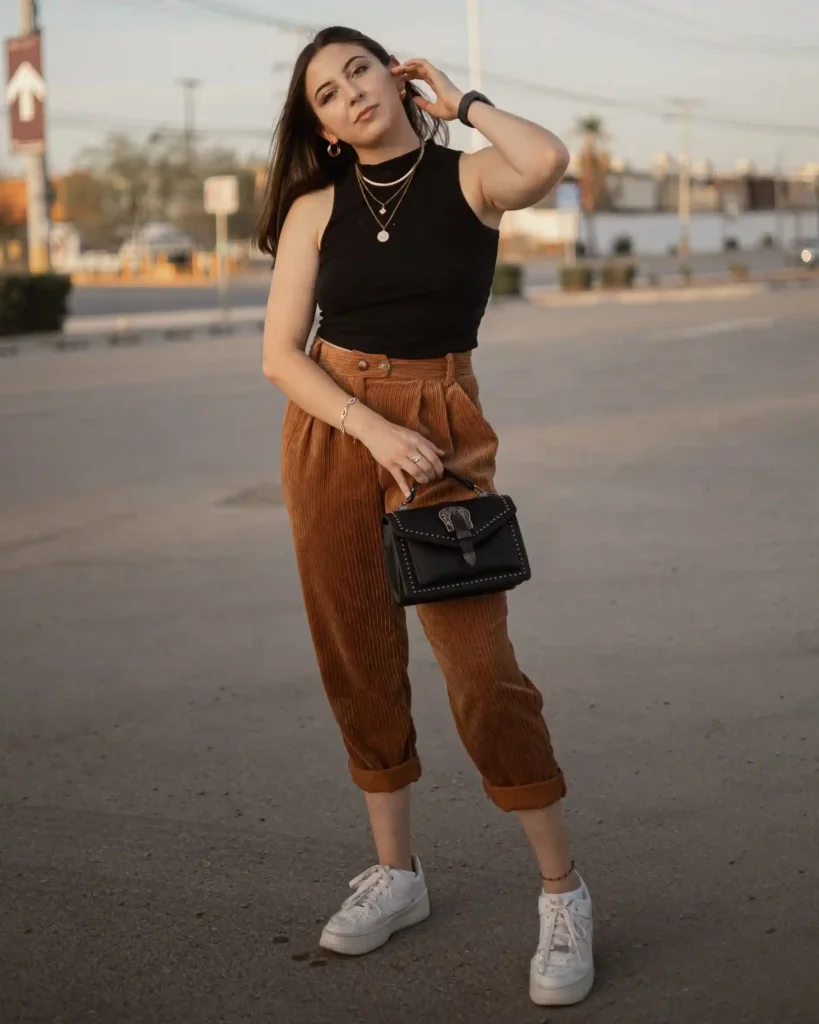
This is the black-with-brown approach using a warm rust, which is lighter and more colorful than chocolate. The white sneakers provide an optional way to introduce a lighter accent into the combination. For cooler weather, a cream cardigan or a camel coat would suit the same pants. Keep in mind that this photo shows rust corduroy, not very dark brown, so it doesn’t answer how black looks with espresso.
Where to Start
Look at your pants first. If they’re dark brown, try cream or white on top, then decide whether black appeals to you. If they’re light brown, start with white, then try navy or a soft color. If you have rust or caramel, a black top with light shoes is a good first experiment. Change one thing at a time, usually the top or the shoes, and judge it in daylight.