For most winter weddings, a proper coat is the layer that does the real work, and a shawl or wrap is the lighter backup for shoulder coverage in a heated room. Add tights or another leg layer if the dress has room for it, wear shoes that suit the walk in, and let the invitation and venue set how dressy everything needs to look. The common mistake is dressing only for the ballroom and forgetting the walk from the car, a chilly ceremony, or photographs outside.
Match Your Layers to the Wedding Setting
Cold isn’t evenly spread across a wedding day. What matters is how long you’ll be exposed and whether you can take the layer off when you get inside.
| Wedding setting | Outer layer | Footwear consideration | Why it makes sense |
| Heated hotel ballroom with a short outdoor walk | A dressy coat you can store at the venue, or a heavier wrap if the walk is very short and conditions allow | Dress shoes you can walk in, as long as the path is clear. Check for wet or icy patches first. | Outdoor exposure is brief, so you can prioritize a removable layer without compromising on warmth for the journey. |
| Potentially cold church ceremony | A coat or wrap appropriate for the conditions, or a dress with sleeves | Dress shoes suitable for the indoor setting; weather-appropriate footwear for any slippery outdoor approach | The ceremony may be the longest stretch in the cold, and you’ll mostly be sitting still. Some services may also call for covered shoulders. |
| Outdoor countryside ceremony, then an indoor reception | A full, warm coat for the ceremony and photos; a lighter layer or none for the reception | Footwear with suitable traction for grass, mud, snow, or ice, with dress shoes to change into indoors | Outdoor exposure comes first and the heated reception second, so plan for both conditions. |
WeddingWire’s winter wedding attire guide suggests that a shawl or light cover-up may be enough for an indoor wedding with little exposure between venues, while an outdoor wedding calls for a warmer coat with more coverage. John Lewis’s winter wedding guide also discusses wearing a cover-up for outdoor photographs before removing it for the reception. For religious ceremonies, Emily Post’s wedding guest attire advice notes that expectations around covered shoulders and footwear may vary by setting and custom. If you’re unsure about the ceremony conditions, check the venue details or ask the couple.
Coats That Work Over Wedding Guest Dresses
A long tailored wool or wool-blend coat is a common recommendation. The Knot’s outerwear guide suggests long, tailored styles for winter weddings, while WeddingWire’s expert points to a classic long wool coat. A good-looking coat isn’t automatically a warm one, though. A thin dressy coat can look right and still leave you cold during a long outdoor wait, and its appearance alone doesn’t tell you how well it handles wind or wet weather. Check the construction, lining, and suitability for the forecast before relying on it.
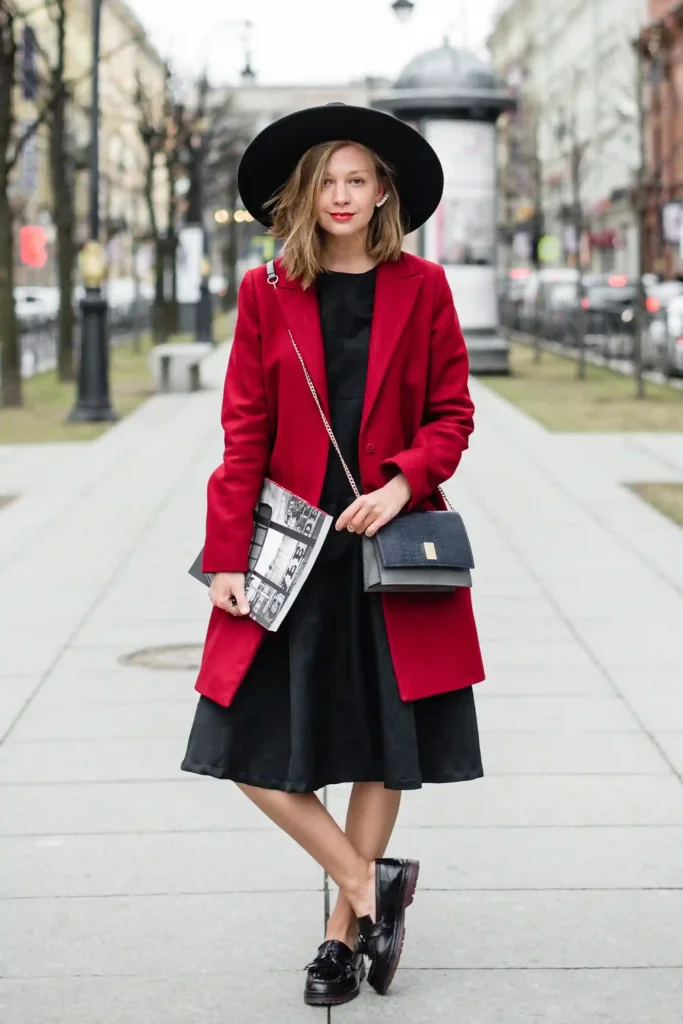
This photograph illustrates the relationship between coat and dress length. The dress extends below the coat, creating a layered look. How practical that is in wet weather depends on how low the dress hem falls. The loafers and accessories make the overall outfit more casual than typical formal wedding attire.
A coat doesn’t have to be longer than the dress, but it’s worth deciding deliberately. Take a knee-length cocktail dress under a longer tailored coat. Put both on, button the coat, then sit down and reach for a seat belt. Check that the dress doesn’t ride up under the coat, that the sleeves sit comfortably, and that you can raise your arms without the shoulders pulling.
A fuller evening gown asks more of a coat. The Knot’s stylist suggests a structured blazer or a generously cut jacket when dealing with a fuller skirt, including the option of draping a jacket over the shoulders. Draping may work for a short transition, but it leaves parts of your arms and torso exposed, so it isn’t a reliable plan for a long outdoor wait. For a gown with a structured bodice or voluminous sleeves, look for room through the shoulders and arms, and check how the coat sits over the skirt.
Your everyday winter coat is a legitimate option, and published styling advice differs on how much it matters. WeddingWire advises against an everyday puffer for a wedding look, while The Knot notes that a travel coat may matter less when it can be checked at the venue. A practical way to decide: if you’ll be photographed outside or keep the coat on during the event, choose something that suits the dress code. If the venue has a coat check and you’ll leave it there, warmth can take priority over how the coat looks with your dress. For a coordinated outfit, The Knot also suggests echoing the coat color in an accessory such as a bag or shoes.
Are Shawls and Wraps Warm Enough?
It depends on the wrap. A sheer chiffon capelet is mainly decorative. A larger, heavier wool or cashmere wrap may offer more coverage, while a faux-fur-style stole can provide a dressier option. How much warmth any of these gives depends on its construction and how it’s worn.
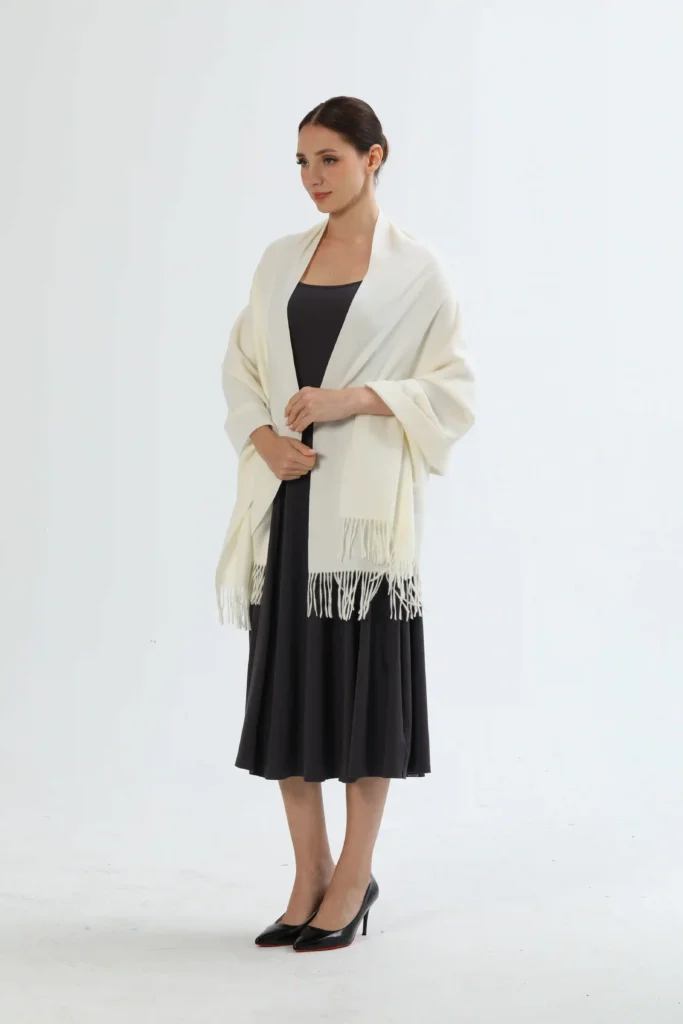
A wide wrap can cover the shoulders and upper arms, but a photograph alone cannot tell you whether it will provide enough warmth outdoors.
Wraps work well for shoulder coverage during a ceremony or in a slightly cool reception room, and they can be removed easily for dancing. They’re less dependable for wind, extended outdoor exposure, or keeping your arms and torso fully covered. A wrap may also slip when you’re carrying a bag or moving around, so check that it stays comfortably in place without needing constant adjustment.
Staying Warm Under Your Dress
Tights come in sheer and opaque styles, but opacity isn’t the same as insulation. John Lewis suggests sheer black tights for winter wedding outfits, while The Knot’s winter wedding guide recommends fleece tights under a floor-length dress. How warm hosiery feels depends on its fabric and construction, not simply how much skin shows through it.
Thermal hosiery may be less noticeable under a longer dress, provided the fabric and fit allow it. A shorter or closely fitted dress may reveal the underlayer or feel uncomfortable with added thickness.
A slip can provide another layer beneath thin fabric, although it shouldn’t be treated as a substitute for proper cold-weather clothing. Long sleeves may also help with coverage during a cool ceremony. Try any underlayer with the dress before the event. If it bunches at the waist, restricts movement, or shows through the fabric, a warmer outer coat may be the more practical solution.
Shoes for a Winter Wedding
Closed-toe pumps are a traditional winter wedding option, according to WeddingWire, while dressy flats or suitable ankle boots may also work depending on the outfit and invitation. John Lewis recommends considering both comfortable heels and smart boots.
A block heel may be easier to manage than a narrow heel on some firm, uneven surfaces, but it doesn’t make icy ground safe. For snow or ice, OSHA’s winter-weather safety guidance, written for workplace conditions, recommends suitable traction footwear, including insulated, water-resistant boots with appropriate treads. It also advises taking shorter steps at a slower pace.
A practical option is to wear weather-appropriate footwear for the journey and carry dress shoes to change into indoors, as Adrianna Papell’s formal winter wedding guide also suggests. Check whether the venue has somewhere suitable to store wet boots or a spare pair of shoes.
What If the Dress Code Is Cocktail, Semi-Formal or Black Tie?
The invitation and the time of the wedding are important guides to formality, according to Emily Post. Your coat doesn’t have to match the dress code word for word, but it should suit the part of the event where you’ll actually wear it.
Cocktail and semi-formal attire have overlapping expectations, so a tailored coat can work with either a knee-length cocktail dress or an appropriate midi dress. For formal and black-tie occasions, a more refined outer layer may be preferable when it will remain part of your visible outfit.
Adrianna Papell distinguishes between formal, black-tie optional, and black-tie expectations, so check the wording of the invitation rather than treating them as interchangeable. A practical winter travel coat is still reasonable for a formal event, particularly if it can be removed and stored before the ceremony or reception.
A Final Check Before the Day
Read the invitation and confirm where the ceremony and reception will take place. Check the forecast close to the wedding date. Try the coat over the actual dress: button it, sit down, and raise your arms. Check the walking surfaces you’ll encounter, try your footwear with the dress, and decide what to remove or change once you’re inside.