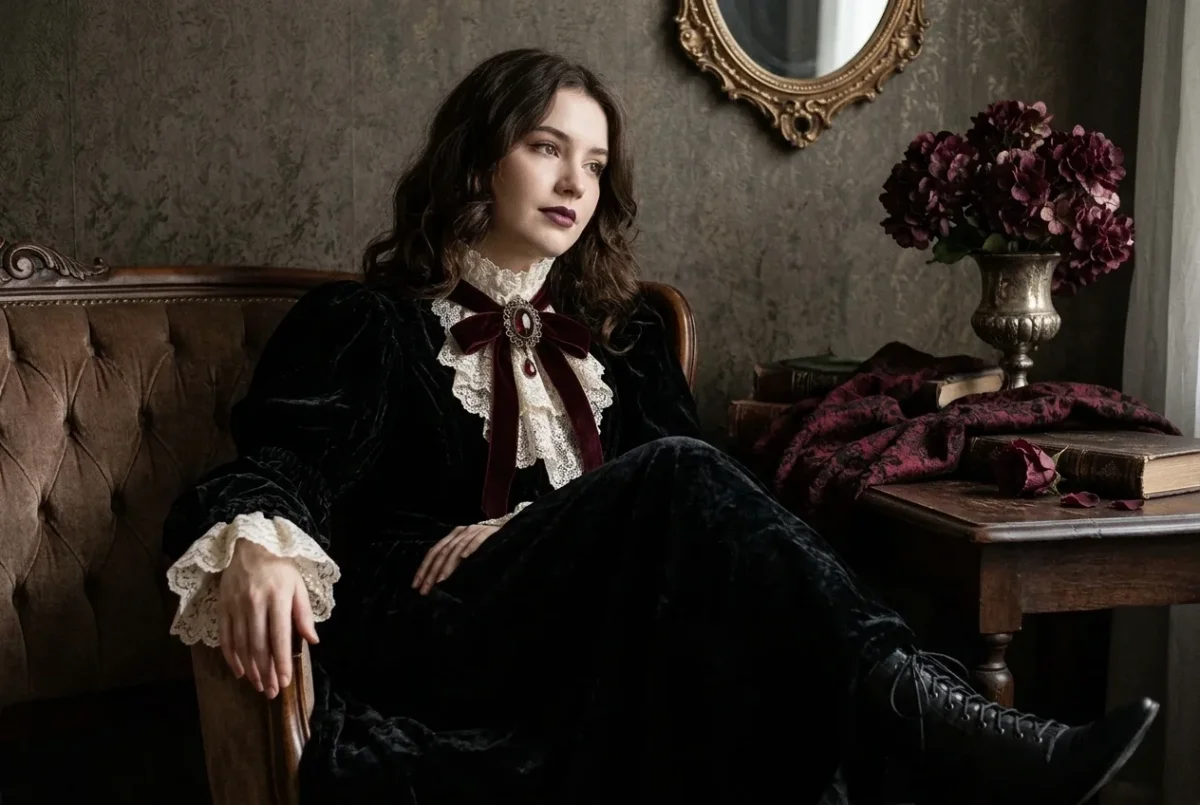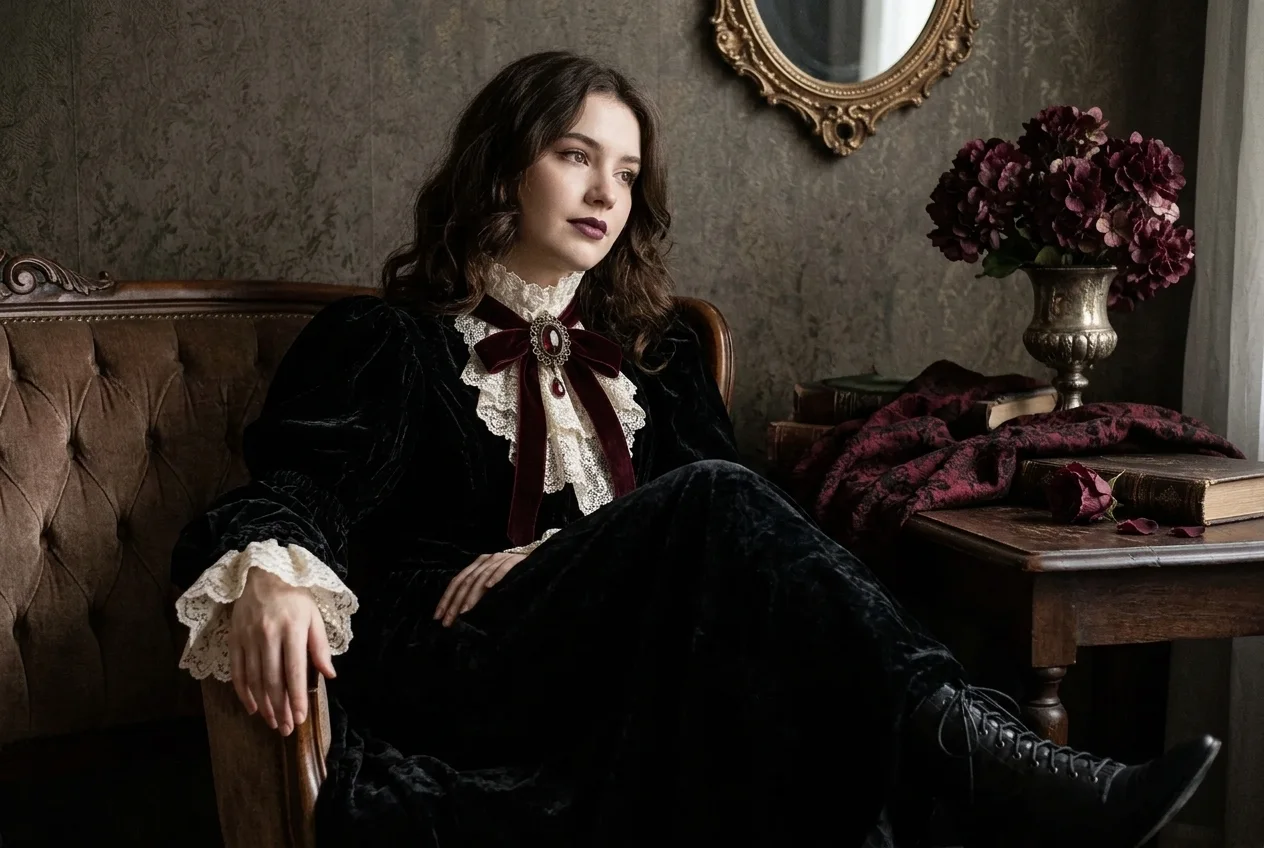
Romantic Goth is a loosely defined style that pairs a dark palette with period-inspired details: lace, velvet, full sleeves, high collars, and long skirts. It is a modern fashion description, not a historical clothing category, and people use the term differently.
This guide covers what the look usually involves, where its references come from, and how to assemble six complete outfits. None of them requires a costume or a corset.
What Is Romantic Goth?
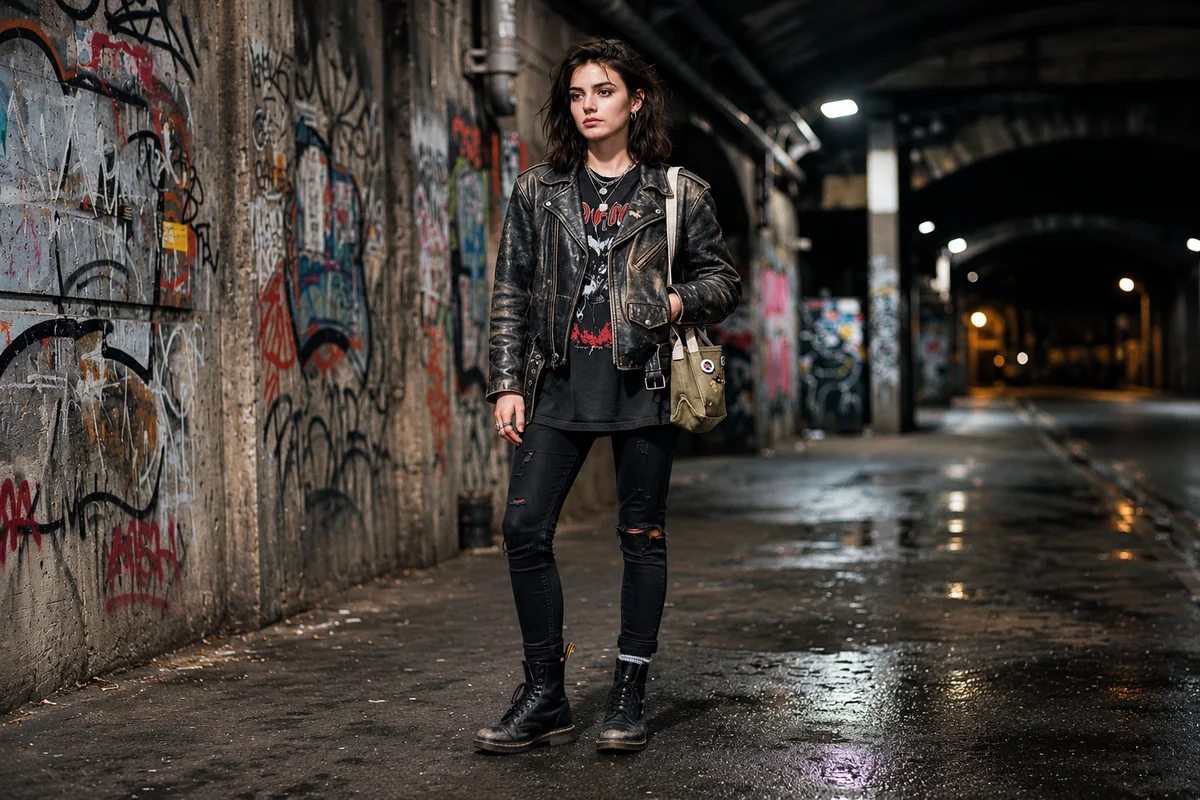
General gothic-inspired fashion often uses dark basics, boots, and metal hardware. Romantic Goth places more emphasis on details such as voluminous sleeves, defined necklines, flowing skirts, and textured fabrics.
A black T-shirt and jeans can look gothic-inspired without necessarily looking Romantic Goth. The distinction often comes from the garment’s shape, fabric, and historically inspired details rather than its color alone.
A few features recur:
- Shape: High or defined necklines, fuller sleeves, a fitted or emphasized waist, and long skirts or layers.
- Texture: Velvet, lace, sheer panels, and sometimes satin, often paired with simpler fabrics.
- Color: Black is a common base, with burgundy, plum, deep green, or ivory used for contrast.
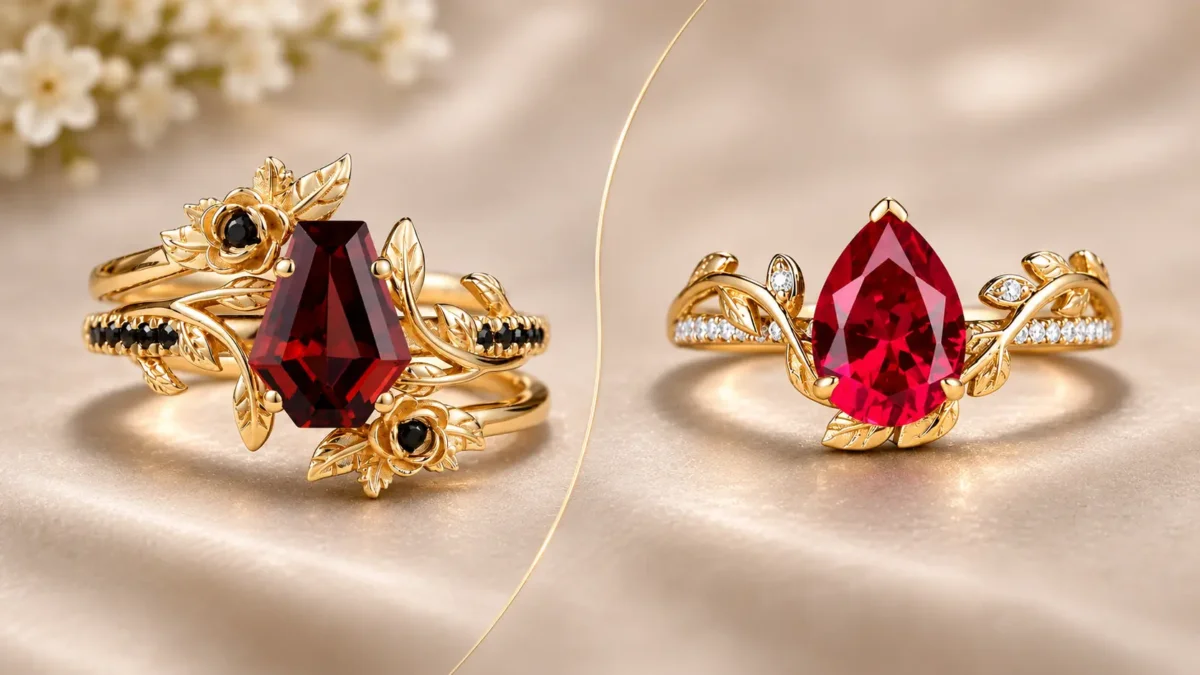
- Finishing details: Brooch-style pins, pendants, ribbons, and pointed shoes or boots.
These are conventions, not requirements. No particular fabric, color, or accessory is mandatory, and the term has no universally agreed boundaries with neighboring looks such as Victorian-inspired goth, vampire-inspired styling, and dark academia.
For a broader, closet-first approach, see how to create gothic-inspired outfits with clothes you already own.
Wearing Romantic Goth clothing also does not automatically make someone part of the goth subculture, which has its own music-based history and community.
Where the Look Comes From
Romantic Goth has no agreed founding date or single authoritative definition. Its visual references come from several different traditions, which are sometimes grouped together even though their histories are distinct.
Romantic-era fashion. The Wadsworth Atheneum’s exhibition Gothic to Goth: Romantic Era Fashion & Its Legacy examines women’s dress from roughly 1810 to 1860. It describes designs inspired by earlier periods, including medieval and Renaissance styles, with decorative collars, puffed sleeves, and an interest in color and pattern.
Romantic-era clothing was not uniformly black. The exhibition also interprets later goth and steampunk aesthetics as drawing from a Romantic sensibility. That is a curatorial interpretation, not evidence of an unbroken clothing tradition connecting those periods.
Victorian mourning dress. Queen Victoria’s reign lasted from 1837 to 1901, overlapping with part of the period covered by the Wadsworth exhibition.
The Victoria and Albert Museum explains that, particularly after Prince Albert’s death in 1861, mourning dress became an increasingly important marker of respectability. The Metropolitan Museum of Art notes that black mourning dress reached its peak during Queen Victoria’s reign.
These were clothing customs associated with bereavement and social expectations, not an early form of the modern goth subculture.
Gothic literature. Gothic fiction developed independently of modern goth fashion. Horace Walpole’s The Castle of Otranto, first published in 1764, helped establish the Gothic novel. Its atmosphere of mystery and unease continued to influence later Gothic literature, including works associated with the Brontës and Edgar Allan Poe.
The themes and imagery of Gothic fiction can provide inspiration for contemporary fashion, but that does not mean any particular novel created Romantic Goth style.
The goth subculture. Modern goth developed in Britain through punk and post-punk music scenes in the late 1970s and early 1980s. Music and community remain important to the subculture.
The Museum at FIT’s Gothic: Dark Glamour, presented in 2008–09, examined gothic style in fashion, including its connections with both subcultural clothing and high fashion.
Contemporary Romantic Goth styling draws selectively from these references rather than following a single documented historical lineage.
Recent runway coverage has highlighted related gothic-romance details. FashionUnited’s report on London Fashion Week’s autumn/winter 2026 collections discussed corsets and lacing, drawing a possible connection with Emerald Fennell’s Wuthering Heights. NET-A-PORTER’s fall/winter 2026 trend roundup also described a gothic-romance mood.
These are observations about fashion collections, not evidence that Romantic Goth has become a mainstream everyday style.
The Building Blocks: Silhouette, Fabric, and Color
Romantic Goth styling often becomes easier to manage when you decide which detail you want people to notice first. That might be the shape of a blouse, the texture of a dress, or the length of an outer layer.
Sleeves or neckline? Full sleeves create a more noticeable shape around the shoulders and arms, while a high or squared neckline draws attention toward the upper body without necessarily adding volume.
A blouse with both puffed sleeves and a ruffled collar can work well, especially when paired with simpler clothing below. For a quieter approach, choose one expressive detail and let the other remain understated.
Consider outerwear, too. A closely fitted jacket may flatten voluminous sleeves, while a coat with roomier arms allows them to keep their shape.
Velvet or lace? Velvet can give an outfit visual depth through its texture and the way its surface reflects light. A relatively simple velvet dress is one way to let the fabric stand out.
Lace introduces pattern and, depending on its construction, transparency. Lace sleeves can add detail to an otherwise plain top, while a garment with excessive lace may look more balanced with understated accessories.
You can combine both fabrics. For example, a velvet dress with a small lace detail at the neckline creates a different effect from pairing a full lace blouse with a textured velvet skirt.
Black or a jewel tone? An all-black outfit emphasizes silhouette and fabric differences. Burgundy, plum, or deep green can introduce contrast without losing the darker overall appearance.
An ivory blouse with a black skirt is another option, especially if its collar or sleeves provide the romantic detail.
These combinations reflect contemporary styling choices, not historically accurate Romantic-era color rules.
Accessories can help complete the shape of an outfit. A pin or narrow ribbon draws attention to a collar, while a pendant can sit naturally within an open neckline.
Pointed shoes can create a continuous visual line beneath a long skirt or trousers, but they are an option rather than a requirement. Choose details that complement the clothing instead of adding several accessories simply because they look gothic.
Romantic Goth Outfits
These six combinations show different ways to build Romantic Goth outfits around distinctive garments, from expressive blouses and velvet dresses to tailored separates and winter outerwear.
Start With a High-Collar Blouse
Wear a black or ivory blouse with a high neckline and softly puffed sleeves. Pair it with a long A-line or bias-cut skirt in black, plum, or deep green. Add pointed Mary Janes or low-heeled ankle boots, then finish with a brooch-style pin or narrow ribbon at the collar.
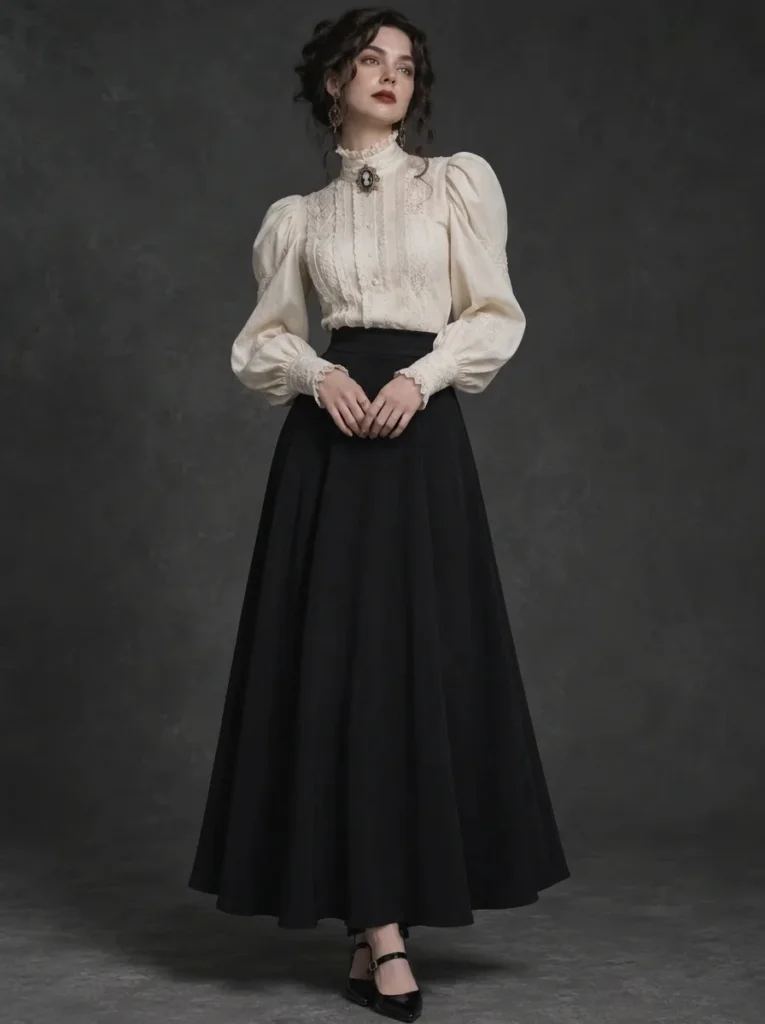
The blouse provides the main romantic detail. Its collar and sleeve shapes loosely echo elements discussed in the Wadsworth exhibition, although this is a contemporary, historically inspired outfit rather than a reproduction.
Think about how much volume you want in the complete silhouette.
A blouse with generous sleeves can look more defined against a relatively narrow or softly draped skirt. Pairing it with a fuller skirt creates a more expansive look, which may suit a dressier setting.
Outerwear is another consideration. If the sleeves are gathered or noticeably puffed, try the blouse beneath the coat you intend to wear. A narrow armhole may compress the fabric or make movement uncomfortable.
Because a high collar already draws attention toward the neckline, earrings or a small pin may work better than a large necklace.
For a less dressy variation, replace the skirt with dark straight-leg trousers. The blouse remains the focus without requiring a dramatic overall silhouette.
Start With a Velvet Dress
A velvet midi or maxi dress in black, burgundy, or dark plum can form the basis of a Romantic Goth evening outfit.
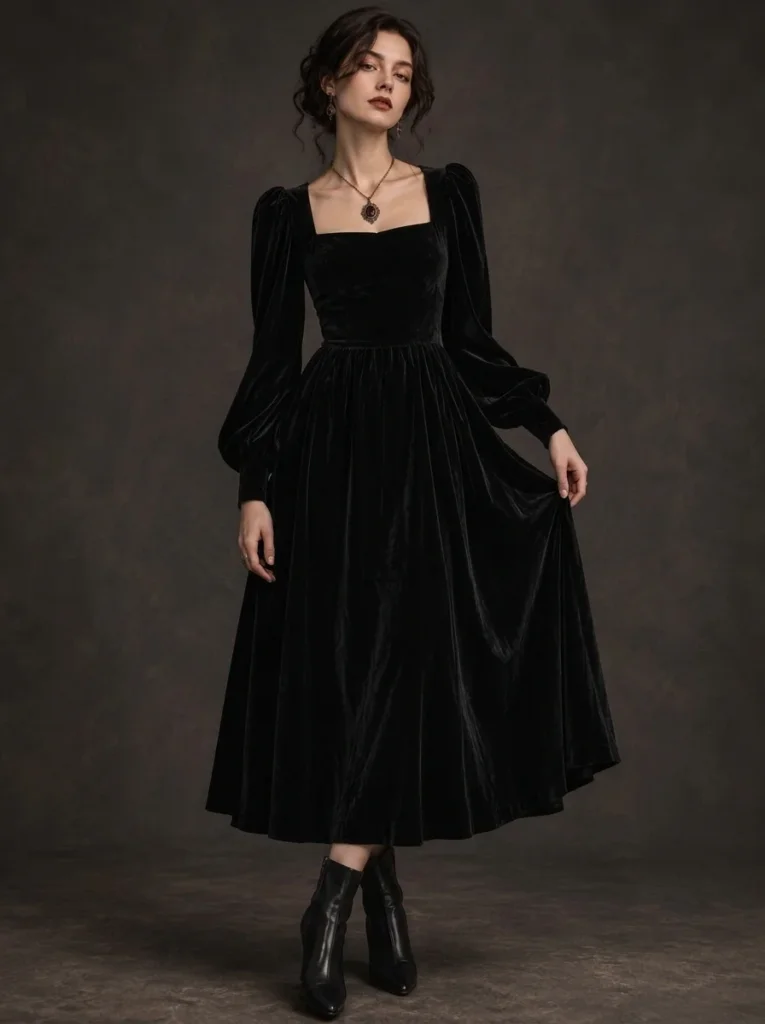
Choose a dress with a defined neckline, such as a square or scooped shape, or one with longer sleeves and a gently fitted waist. Pair it with block-heel or pointed ankle boots and understated jewelry.
The neckline changes how the outfit comes together.
An open neckline gives you space for a pendant, while a higher neckline may look more complete with earrings instead. A long-sleeved dress with a relatively simple neckline can place more attention on the velvet itself.
To move the look away from ordinary formalwear, consider the combination of fabric, silhouette, and finishing details rather than relying on color alone.
A burgundy velvet dress with a longer hem, dark ankle boots, and a vintage-inspired pendant offers a different visual effect from the same dress worn with delicate evening sandals and bright jewelry.
For a quieter variation, try a stretch-velvet midi dress with low boots and small earrings.
Check the fabric and care label before buying. Velvet construction varies, and some garments may show pressure marks or require more careful maintenance than others.
Start With a Lace-Sleeve Top
Begin with a fitted black top featuring lace or sheer sleeves. Pair it with a long, structured skirt in burgundy, plum, or black, then add pointed ankle boots and minimal jewelry.
The lace creates detail around the arms, while the skirt provides a more defined shape below. This produces a different silhouette from using a lace skirt as the main decorative element.
Pay attention to where the lace appears.
Sleeves made from sheer lace may be mainly decorative, offering little warmth or coverage. If lace extends across the shoulders or bodice, check whether the garment includes an opaque lining or whether you would prefer an additional layer underneath.
The scale of the lace pattern also affects the combination. Fine lace can introduce subtle texture, while a larger, more open design becomes more noticeable.
For a simpler outfit, let the sleeves provide most of the pattern and choose a plain skirt. If the lace detail is small, a skirt with pleats or a subtle texture can introduce additional interest without overwhelming the top.
For cooler weather, consider how a cardigan or coat will sit over the sleeves. Rough linings, bag straps, and accessories may catch on delicate lace, so check the garment’s construction before wearing it for an extended outing.
Start With a Corset-Inspired Layer
Layer a modern corset-style belt or structured lace-up bodice over a black or ivory blouse. Add dark wide-leg trousers and pointed boots, keeping the accessories relatively simple.
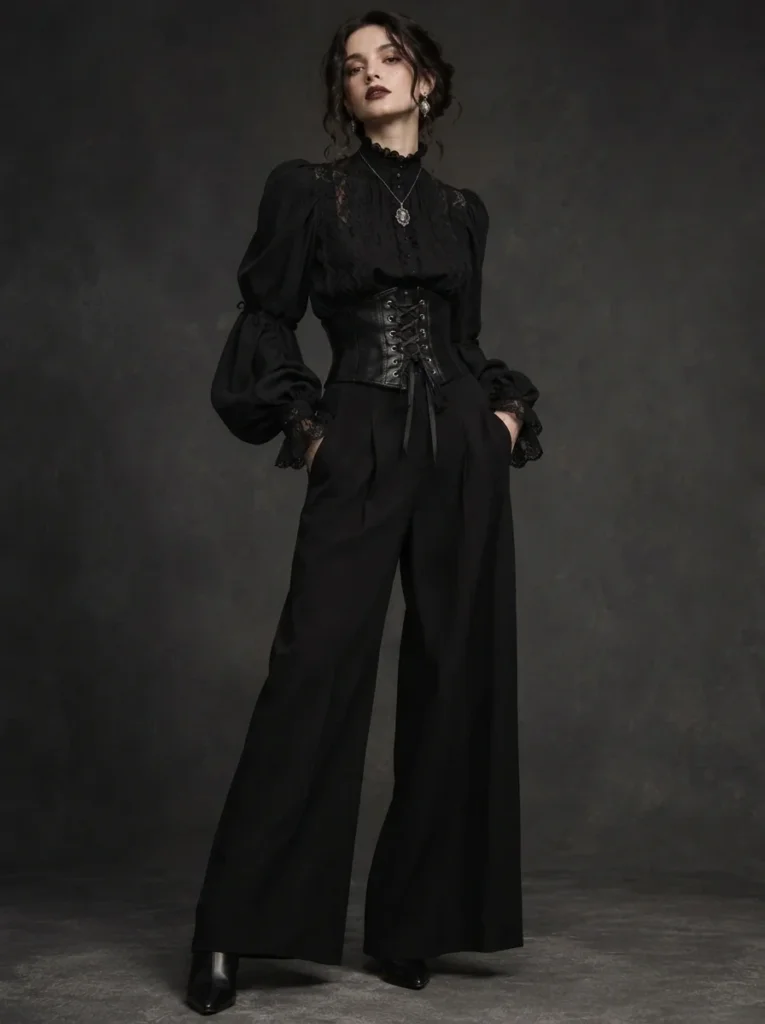
This outfit draws on the visual idea of a defined waist without attempting to reproduce historical corsetry.
A corset-style belt is usually the simpler option. It sits around the waist over an existing garment and allows the blouse to remain visible above and below it.
A structured bodice covers more of the torso. It may work better over a fitted blouse with fewer bulky folds, depending on the garment’s construction.
The choice changes the overall impression. A belt creates a smaller area of structure, while a bodice becomes a more prominent part of the outfit.
Wide-leg trousers provide a contemporary contrast to the fitted layer, and fuller blouse sleeves can add a softer detail above it.
Comfort matters more than achieving a particular waist shape.
Choose a garment that allows you to sit, breathe, and move comfortably. Check how it feels when bending or sitting down, rather than judging the fit only while standing.
Adjustable closures may help, but they do not guarantee comfort. Avoid tightening any structured garment to the point that it restricts movement or breathing.
This is a modern, corset-inspired combination, not an authentic historical outfit.
Start With a Long Coat or Cape
A long coat or cape can provide the main visual feature of a Romantic Goth outfit, particularly when worn over a relatively simple dress.
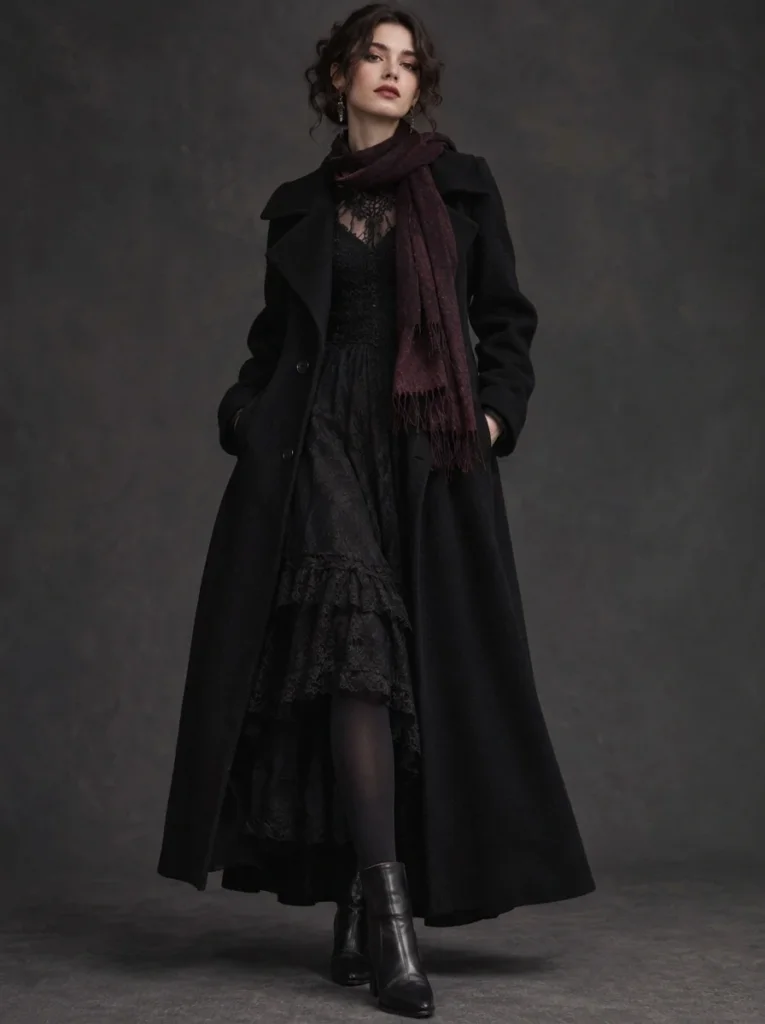
For a cold-weather combination, choose a long black or burgundy coat over a dark velvet or lace-detail dress. Add opaque tights and low boots, with a scarf or gloves when the weather requires them.
A coat and a cape are not interchangeable for every situation.
A lined wool or wool-blend coat with a secure closure may be more suitable for cold weather, depending on its weight and construction. A decorative cape may provide less coverage, particularly around the arms.
If you prefer a cape, check its fabric, lining, closure, and how easily you can move while wearing it. Some are primarily decorative rather than practical winter outerwear.
The relationship between the outer layer and dress hem also changes the finished outfit.
A coat that covers most of the dress creates a longer, more continuous silhouette. A shorter coat allows more of the skirt to show, while a dress that extends slightly below the coat creates another layered effect.
Any of these can look intentional when the colors, proportions, and fabrics work together.
Make sure the coat has enough room for the sleeves underneath, particularly if the dress has gathered shoulders or lace details.
Contemporary capes and flowing outer layers can suggest period-inspired fashion, but they should not be described as faithful reproductions of nineteenth-century garments.
Start With a Full-Sleeved Shirt and Waistcoat
A waistcoat can give Romantic Goth a more tailored direction when paired with expressive sleeves, a softer neckline, and richly textured fabric.
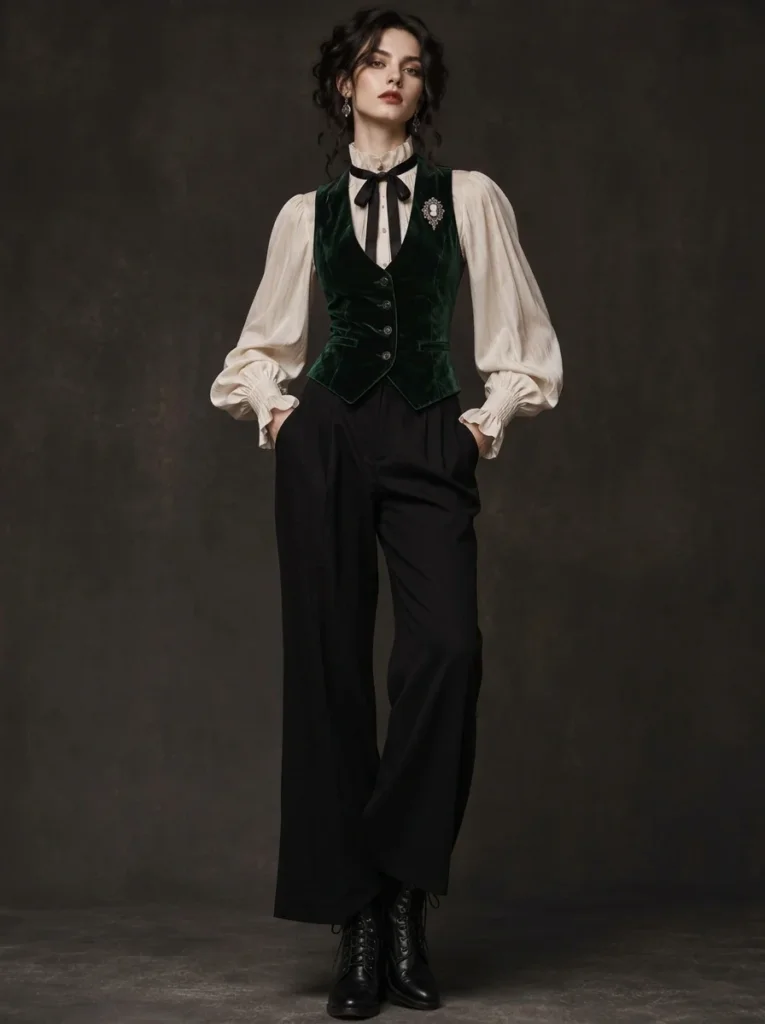
Start with a black, ivory, or white shirt featuring fuller sleeves gathered at the cuffs. Choose a soft collar, narrow ribbon, or small neck bow instead of a conventional crisp button-down neckline.
Layer a fitted waistcoat over it. A velvet or jacquard in black, burgundy, or deep green can provide a stronger romantic element than an ordinary plain suiting fabric.
Finish with dark straight-leg or high-waisted trousers, Chelsea or lace-up boots, and a small brooch or ring.
A basic business shirt and plain wool waistcoat may read as formal tailoring. Gathered sleeves, a softer neckline, and textured fabric move the combination toward a more romantic, historically inspired appearance.
This does not mean that a waistcoat automatically makes an outfit Romantic Goth. The overall silhouette and selected details matter.
Check that the waistcoat fits comfortably across the chest and shoulders without pulling at the shirt beneath it. The sleeves should also have enough room to move without bunching excessively.
For a more understated version, choose a darker shirt and keep the accessories minimal. If you prefer a stronger romantic influence, let the sleeves and neckline become the main focus rather than adding multiple decorative pieces.
Making Romantic Goth Wearable
Romantic Goth can be subtle or theatrical. Neither approach is inherently wrong, but the amount of detail you choose should reflect where you intend to wear the outfit.
For a relatively understated everyday look, you might focus on one distinctive piece, such as a high-collar blouse or textured waistcoat. More elaborate combinations of lace, velvet, corset-style layers, and dramatic outerwear may suit events where you want a stronger visual effect.
Practical adjustments depend on the setting:
- Climate: Velvet, long skirts, and layered clothing can feel heavy in warm weather. Lighter fabrics or fewer layers may make a similar silhouette easier to wear. In cold weather, prioritize an appropriately insulated coat rather than relying on decorative outerwear.
- Work: Dress codes vary. A high-collar blouse with tailored separates may fit some workplaces more easily than a corset-inspired layer or cape.
- Comfort: Check whether you can sit, walk, climb stairs, and move your arms comfortably in structured or layered garments.
- Footwear: Comfort depends on the shoe’s fit, heel height, sole, and construction. Choose boots or flats suited to the amount of walking you expect.
Historical inspiration also needs to be distinguished from authenticity. A contemporary blouse with Victorian-inspired details is still a modern garment, regardless of how closely it resembles an older style.
Where to Start
If you’re unsure which Romantic Goth outfit to try first, choose the detail that appeals to you most.
If it’s dramatic sleeves, start with a blouse and keep the rest simple. If it’s velvet, build around a dress. If you prefer tailored clothing, explore a textured waistcoat with a fuller-sleeved shirt.
The aim is to build a combination whose silhouette, materials, and details work together—not to collect every garment associated with the aesthetic.