Start with the hemline. It helps you decide which boots or shoes to wear, whether you want tights, and how a coat will sit over the dress. Then choose a layer that suits the weather, and add a belt only if you want more shape than the dress has on its own. In colder conditions, you may need tights, warmer footwear and suitable outerwear, depending on the dress’s fabric and thickness. This guide shows how dress length, knit thickness, shoes, layers and warmth work together, using four photographed examples.
Start With Your Dress: Length and Knit
Two things about the dress itself influence most styling choices: where the hem falls and how thick the knit is.
| Dress length | Shoes that work | Layers | What to check |
| Mini (above the knee) | Knee-high boots, ankle boots, sneakers | A coat longer than the hem, or a short jacket | How much leg shows and whether the outfit suits the weather |
| Knee-length to midi | Ankle boots, loafers, sneakers, knee-high boots | Long coat, blazer, denim jacket | Where the hem meets the boot shaft; taller boots may sit partly beneath the dress |
| Long (calf to ankle) | Ankle boots, lace-up boots, sneakers | A coat worn open or closed | Whether the hem clears your shoes and the ground when walking |
Knit thickness matters as much as length. A fine, fitted ribbed knit often sits more smoothly under a coat. A chunky or oversized knit adds volume, which can affect how a belt sits and how much room a coat needs through the shoulders and sleeves. If layering feels restrictive or bulky, try a roomier coat or a thinner knit underneath.
In her sweater-dress styling guide, Meghan Donovan discusses how sizing and dress length can affect an outfit, including when alterations may be worth considering.
Shoes and Boots by Hemline
Short Dresses

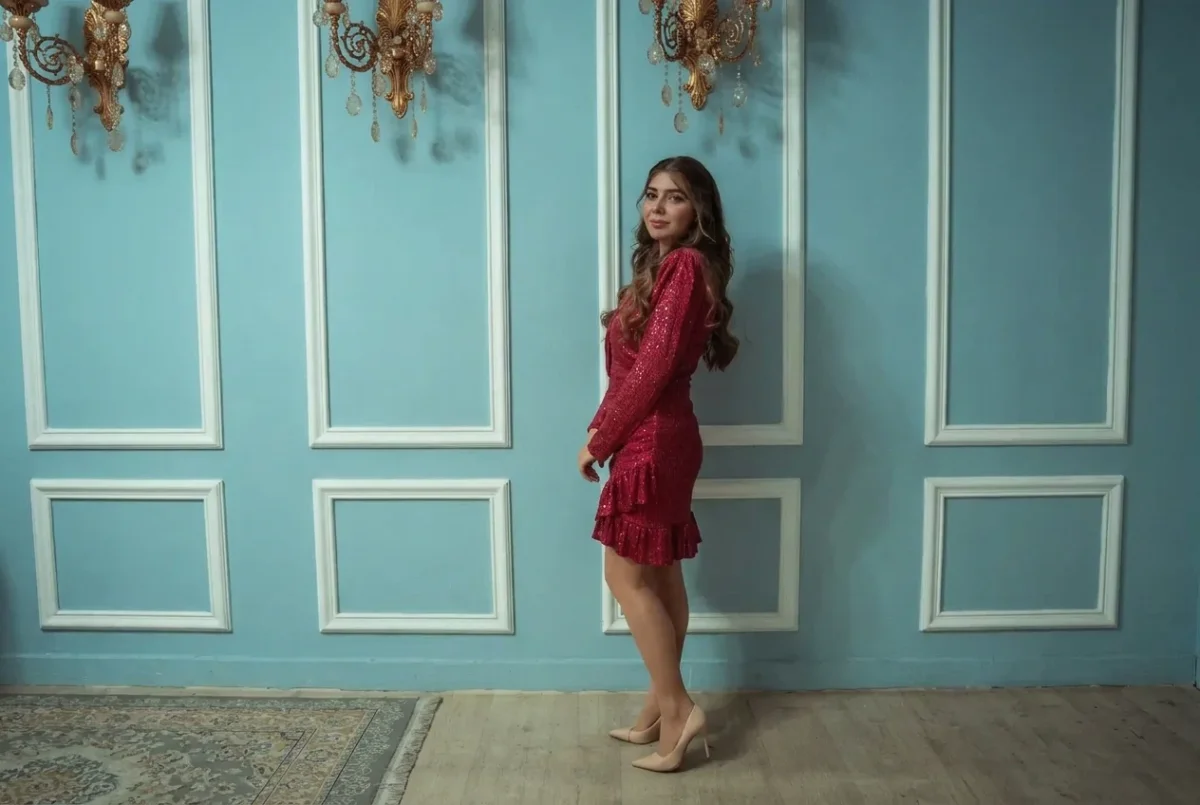
This outfit shows a useful decision when pairing a short sweater dress with tall boots: how much leg you want visible between the dress hem and the boot tops.
If you’d rather cover that gap, try tights, leggings or taller boots. Leaving some leg visible is another option when the weather is mild enough.
MasterClass includes knee-high and over-the-knee boots among its options for shorter sweater dresses, with tights or leggings for additional coverage in cold weather.
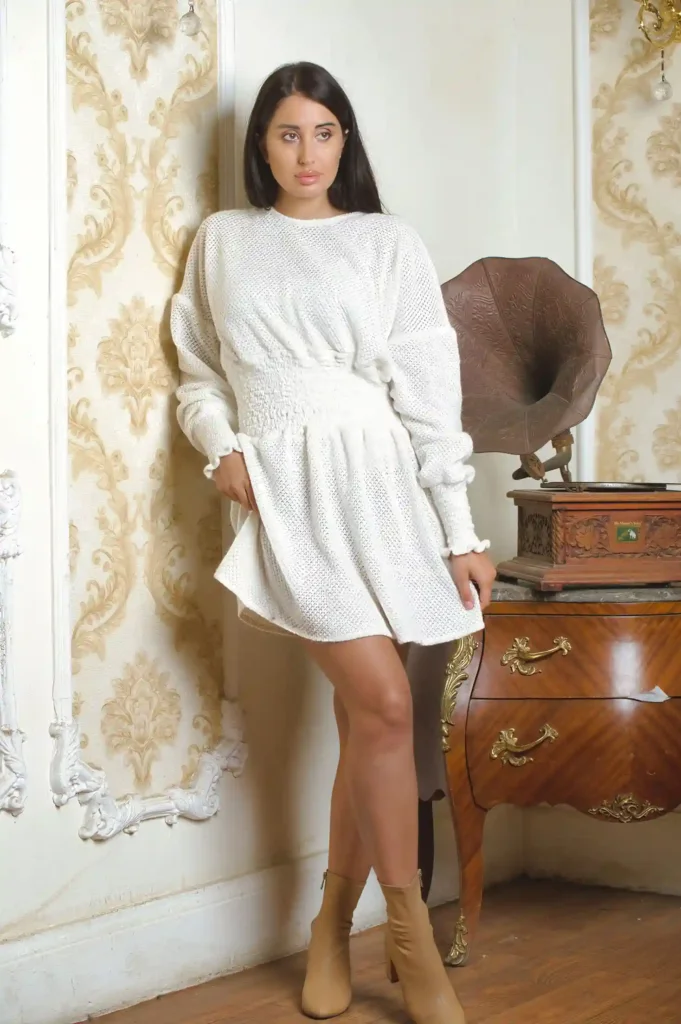
Ankle boots leave more of the legs visible with a short dress than taller boots generally do. That makes the weather and your preferred amount of coverage important.
The photographed outfit shows bare legs and beige ankle boots. For colder conditions, tights are an option. Choose their fabric and thickness according to the temperature and the coverage you want.
For a casual look, try opaque tights with flat ankle boots. For something dressier, sheer tights and heeled boots are another styling option. TeriLyn Adams discusses both approaches in her sweater-dress outfit guide.
The white dress already has a gathered waist, so an additional belt isn’t necessary unless you prefer that look.
Knee-Length and Midi Dresses
Knee-length and midi sweater dresses work with several kinds of footwear, including ankle boots, knee-high boots, loafers and sneakers.
With knee-high boots, how much of the boot remains visible depends on both the dress hem and the height of the boot shaft. A knee-length dress may leave much of the boot showing, while a longer midi dress may cover most of it.
With ankle boots, look at where the dress hem ends in relation to the top of the boot. If you prefer less visible leg between them, you could try taller ankle boots, tights or a different dress length.
These are styling choices, not fixed rules. The main practical checks are whether the shoes feel comfortable, suit the occasion and work with the weather.
Long Dresses

With a longer sweater dress, less of the footwear may be visible. Ankle boots can work because they sit beneath or near the dress hem, depending on the length and cut.
This photograph shows a long gray knit dress, an open beige coat and black lace-up boots. The coat adds another layer without fully hiding the dress.
When styling a long sweater dress, check that the hem doesn’t catch under your shoes or drag when you walk. This matters particularly on stairs, wet sidewalks and uneven ground.
Belted or Loose?
A belt can change the shape of a sweater dress by drawing attention to the waist. It is an option, not a requirement.
Both TeriLyn Adams and wit & whimsy discuss belting sweater dresses as one way to change their silhouette.
Before adding a belt, consider the knit and cut:
- Chunky knits: A belt may gather thicker fabric around the waist. Try it on and check how the dress sits when you move.
- Oversized dresses: If you like the relaxed shape, you can leave the dress loose instead of defining the waist.
- Dresses with built-in shaping: A gathered waist or an existing belt may already create the outline you want.
Try the dress with and without the belt. Sit down, walk around and check whether the fabric feels comfortable or bunches where you don’t want it.
Coats and Layers

A long coat can provide coverage over a shorter sweater dress while leaving some of the outfit visible.
In this photograph, the beige knit dress ends around the knee, and the coat extends farther down. The similar neutral colors create a coordinated look without requiring the pieces to match exactly.
The fitted knit also sits beneath the coat without obvious excess fabric in the photograph. With a chunkier dress, check that your coat has enough room through the shoulders, arms and body.
Other layering options include:
- Blazer: A structured blazer can make some sweater dresses look more polished. Check that it fits comfortably over the sleeves and suits the occasion.
- Denim jacket: A casual layer for milder weather. Jacket length and room through the shoulders affect how it sits over the knit. Our guide to styling a denim jacket explains those considerations.
- Cropped jacket: Can create a different shape over a longer dress. If the combination feels bulky around the waist or hips, try a less structured layer.
There isn’t one correct coat length for every sweater dress. Choose outerwear that provides the warmth you need and fits comfortably over the garment.
Staying Warm in a Sweater Dress
A sweater dress may feel comfortable indoors but need additional layers outside, depending on its material, knit thickness, the temperature and wind.
The simplest adjustments are:
- Tights: Choose the thickness and material according to the weather. Opaque tights provide more visual coverage, but opacity alone doesn’t determine warmth.
- Leggings: Can provide additional leg coverage under shorter sweater dresses, depending on the outfit and how they fit.
- Boots and socks: Footwear with suitable coverage, comfortable socks and weather-appropriate construction can help when temperatures drop.
- Outerwear: A coat that fits over the dress is important when the knit alone doesn’t provide enough warmth.
A sweater dress can also work in milder weather without heavy winter layers. Our guide to what to wear in 65-degree weather explains how to adjust clothing for changing conditions.
The important point is to dress for the actual weather rather than assuming every knitted dress provides the same amount of warmth.
Casual, Work and Dinner Outfits
For casual days, try a sweater dress with sneakers or comfortable flat boots. A denim jacket, cardigan or relaxed coat can provide an extra layer when needed.
For work, a knee-length or midi fine-knit sweater dress with a structured blazer and loafers or ankle boots can work in some offices, depending on the dress code. Our guide to smart casual vs. business casual explains how those expectations differ.
For dinner, try a midi sweater dress with heeled ankle boots, a long coat and simple jewelry, adding tights if the weather calls for them. A handbag can finish the outfit without adding bulky layers.
These are starting points, not separate wardrobes. The same dress can often work in different settings with changes to shoes and outerwear.
Where to Start
Put on your sweater dress and look at where the hem falls. If it’s short, decide how much leg coverage you want and choose tights or boots accordingly. If it’s knee-length or midi, check where the hem meets your shoes. If it’s long, make sure it clears the ground when you walk.
Then choose a coat that fits over the knit and add a belt only if you want a different shape. Start with the dress you already own rather than buying extra pieces to recreate a particular outfit.